Author: ISA NCB

  • Operation Theatre Disasters: Who is Legally Responsible?

    Operation Theatre Disasters: Who is Legally Responsible?


    Dr. Vikram Alsi

    MBBS, DA Anaesthesia Consultant

    Operation theatre disasters raise a recurring question in medical law: when a patient suffers harm during surgery, who is legally responsible? Law does not impose liability merely because a bad outcome occurred — it requires proof that the conduct fell below the standard of care expected of a reasonably competent medical professional.

    The controlling framework in India draws from Jacob Mathew v. State of Punjab, where the Supreme Court stressed that criminal liability for medical negligence requires gross negligence or recklessness, not a mere error of judgment. This article argues that responsibility in operation theatre disasters is best allocated by identifying the source of the failure: hospital infrastructure, pre-operative assessment, patient selection, anaesthetic technique, or surgical technique.

    Legal Framework

    The Supreme Court has repeatedly held that medical negligence is tested against the standard of a reasonably competent practitioner acting with ordinary skill and care. In civil and consumer proceedings, the inquiry is whether there was deficiency in service or breach of the duty of care; in criminal proceedings, the threshold is higher and gross negligence must be shown. The consumer law dimension is significant because medical services fall within consumer protection, so a patient may seek compensation against both the hospital and the treating doctor where deficiency is proved.

    Two decisions are especially important. In Indian Medical Association v. V.P. Shantha [(1995) 6 SCC 651], the Supreme Court held that medical services are ordinarily amenable to consumer jurisdiction, subject to recognised exceptions. In Jacob Mathew v. State of Punjab [(2005) 6 SCC 1], the Court clarified the criminal law standard and cautioned against casual prosecution of doctors for unintended adverse outcomes. Later cases, including Kusum Sharma v. Batra Hospital & Medical Research Centre [(2010) 3 SCC 480], reaffirm that an adverse result does not by itself establish negligence; courts must distinguish between a mishap and a proven breach of duty.

    Infrastructure Failures

    Where the operation room lacks essential equipment, drugs, monitoring devices, or basic safety support, the primary legal responsibility usually lies with the hospital owner and management. This is because the institution has a non-delegable duty to maintain a safe clinical environment, and a systemic deficiency cannot ordinarily be shifted entirely onto the operating doctor. The absence of a defibrillator, warmer, resuscitation support, or other indispensable OT resource may therefore found liability against the hospital, particularly if the defect was known, persistent, and avoidable.

    That said, a doctor is not always absolved merely because the failure is infrastructural. If the anaesthetist or surgeon knew of the deficiency, failed to bring it to the notice of management, or proceeded without adequately informing the patient, individual responsibility may arise. In a strong case for the defence, the hospital would have to show that the patient and relatives were aware of the limitation, that they understood the risk, and that proceeding was nevertheless a conscious and informed choice.

    Pre-operative Evaluation

    Failures in patient evaluation, pre-anaesthetic testing, optimisation, or medication review usually fall most directly on the anaesthetist. Pre-operative assessment is not a routine formality; it is a substantive clinical duty because it determines whether the patient can safely undergo surgery and what precautions are needed. If the patient was not adequately examined, comorbidities were missed, or relevant medicines were not stopped or optimised, the liability case becomes much stronger against the clinician responsible for that assessment.

    The legal analysis is still fact-sensitive. If the anaesthetist reasonably relied on incomplete or misleading information supplied by others, responsibility may be shared, but that does not eliminate professional accountability where the omission was one that a reasonably competent anaesthetist should have detected.

    Patient Selection

    Patient selection problems arise when surgery is undertaken despite clear contraindications or when the patient is not a suitable candidate for the chosen procedure. Responsibility here may lie with the surgeon, the anaesthetist, or both, depending on who controlled the decision and what each professional knew. The legal question is not whether the case became complicated later, but whether the original decision to operate was itself defensible by accepted medical standards.

    A useful analytical point is that the defence must usually show that the patient was selected after proper evaluation and that proceeding was consistent with responsible medical opinion. This reflects the principle that courts do not substitute their own view for that of competent medical experts unless the choice made was plainly unreasonable.

    Anaesthetic Technique

    Complications such as total spinal block, local anaesthetic systemic toxicity, airway mishandling, or other block-related catastrophes require especially careful legal representation. The principal responsibility generally lies with the anaesthetist, because the technique chosen, the dose administered, the monitoring used, and the rescue measures available are all part of the anaesthetic duty of care.

    However, the mere occurrence of a recognised complication does not establish negligence. The courts would ask whether the technique used was an accepted method supported by a responsible body of medical opinion in that region and context, and whether the anaesthetist acted with appropriate skill and judgment. If the method was within accepted practice, properly indicated, and the complication was a known risk despite due care, liability may not arise. But if the choice was experimental, unsupported, or plainly unsafe, responsibility can rest squarely on the anaesthetist.

    Surgical Technique

    Where the complication arises from an intra-operative mistake, an unnecessary procedure, or careless operative handling, the surgeon is ordinarily the primary person answerable. The law distinguishes between a known complication and a negligent act: a recognised risk, even if serious, is not the same as an avoidable error. The surgeon must therefore show proper indication for surgery, informed consent, adherence to accepted operative technique, and an appropriate response when complications occur.

    The strength of the claim increases if the operation performed was the wrong procedure, the wrong side was operated on, a technique was used without adequate justification, or basic intra-operative precautions were omitted. In Kusum Sharma, the Supreme Court emphasised that the burden remains on the claimant to establish negligence and that courts must be cautious not to confuse an adverse result with culpability.

    Hospital Liability

    Operation room disasters often generate not only individual negligence claims but also institutional liability. Under Indian law, hospitals may be vicariously liable for the negligence of employed doctors, nurses, and other staff, and they may also be directly liable for unsafe systems, poor protocols, or deficient infrastructure. This is particularly important in OT cases because many harms arise from a combination of clinical and administrative failures.

    Spring Meadows Hospital v. Harjol Ahluwalia is widely cited for the proposition that hospitals can be held vicariously responsible for the negligence of their staff. Thus, a plaintiff need not always isolate a single wrongdoer; the hospital may be made answerable where its system enabled the injury or where its staff acted negligently in the course of employment.

    Criminal and Civil Liability

    The civil or consumer forum inquiry is whether there was deficiency in service, while the criminal law inquiry is whether the conduct reached the level of gross negligence or recklessness. Jacob Mathew is central because it protects doctors from criminal prosecution for mere mistakes, while still allowing liability where the conduct is so gross that it becomes blameworthy in the criminal sense.

    This distinction matters greatly in OT disasters, because many cases involve tragic outcomes but not necessarily criminal fault. Accordingly, an anaesthetist who chooses a recognised but less common technique may not be negligent if the choice is medically defensible and adequately documented. Likewise, a surgeon is not liable simply because a known complication occurred despite due care. The decisive issue is whether the professional failed to act as a reasonably competent practitioner would have acted in the same circumstances.

    Conclusion

    The legal responsibility for operation room disasters in India is best understood as a multi-factorial one. Infrastructure failures usually point toward the hospital; pre-operative evaluation failures usually point toward the anaesthetist; and operative mistakes usually point toward the surgeon — though liability may be shared where more than one factor contributed to the harm. The controlling legal standard remains that negligence must be proved; courts will not impose liability merely because surgery ended badly or because a complication was serious.

    Bibliography

    • Indian Medical Association v. V.P. Shantha, 1996 AIR 550; (1995) 6 SCC 651 — medical services as “service” under consumer law.
    • Jacob Mathew v. State of Punjab, (2005) 6 SCC 1 — gross negligence as the standard for criminal liability.
    • Kusum Sharma v. Batra Hospital & Medical Research Centre, (2010) 3 SCC 480 — distinction between complication and negligence.
    • Spring Meadows Hospital v. Harjol Ahluwalia, (1998) 4 SCC 39 — hospital responsibility and compensation in medical negligence.
    • Indian Journal of Anaesthesia, “Legal Aspects of Anaesthesia Practice”.
    • Indian Journal of Anaesthesia, “Medico-legal and ethical issues in anaesthesiology”.
  • Mega COLS Training Camp and Pancharakshak Campaign at Seva Sadan, Nagpur

    Mega COLS Training Camp and Pancharakshak Campaign at Seva Sadan, Nagpur

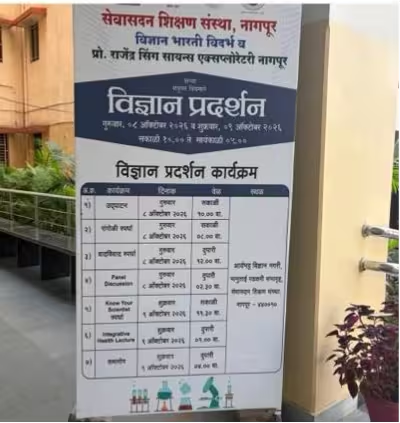
    Nagpur, 8–9 October 2026: The Indian Society of Anaesthesiologists, Nagpur City Branch (ISANCB), in collaboration with the Department of Anaesthesiology, Indira Gandhi Government Medical College (IGGMC), Nagpur, under the banner of the Society of Anaesthesiologists Maharashtra State (SAMS), conducted a Mega Compression-Only Life Support (COLS) training camp along with the Pancharakshak Campaign, an initiative of the National ISA.

    The two-day training camp was organized at Seva Sadan Shikshan Sanstha and Science Exhibition, Sitabuldi, Nagpur. Approximately 1,500 students, teachers, and office bearers of Seva Sadan visited the training booth and learned essential Compression-Only Life Support skills through hands-on practice on mannequins.

    The training sessions were conducted by anaesthesiologists from 10:00 AM to 5:00 PM in two shifts each day. Alongside COLS training, participants were introduced to the five life-saving skills of the Pancharakshak technique.

    Dr. V. C. Shelgaonkar, Professor and Head, Department of Anaesthesiology, IGGMC, demonstrated the Pancharakshak skills. Dr. Shital Dalal, Associate Professor, IGGMC, and Honorary Secretary, SAMS, actively demonstrated COLS techniques in the regional language, making the training accessible and easy to understand for participants.

    The activity was conducted through the collaborative efforts of a dedicated team of anaesthesiologists and medical professionals, including Dr. Deepak Madankar, President, ISANCB 2026–27; Dr. Saurabh Barde, President-Elect, SAMS 2026–27; Dr. Sachin Makade, President, ISANCB 2025–26; Dr. Leena Ingale Gedam, Associate Professor, IGGMC, and Honorary Secretary, ISANCB 2026–27; Dr. Priyal Ramteke, Assistant Professor, IGGMC; Dr. Nilay Mangrulkar, Assistant Professor, IGGMC; Dr. Rajat Shirpurkar, Assistant Professor, IGGMC; Dr. Akshay Muley, Senior Resident; and Dr. Sneha, Dr. Shravya, Dr. Payal, Dr. Jasmine, Dr. Prashant, Dr. Sameer, Dr. Mrunal, Dr. Niketan, Dr. Tushaar, Miss Harshada, Nabila, and Yashasvi. The entire team worked together to make this public awareness initiative successful.

    Mrs. Kanchanji Nitin Gadkari visited the training booth, patiently listened to the explanation of the five life-saving skills under the Pancharakshak Campaign, and showed keen interest in the initiative. She appreciated the public awareness programme undertaken jointly by IGGMC, SAMS, and ISA Nagpur City Branch.

    First-aid booklets were distributed to guests, and the COLS Jeevansanjeevani video was displayed for the audience. Both initiatives were well appreciated by visitors.

    The Mega COLS Training Camp and Pancharakshak Campaign served as an important public awareness initiative, helping approximately 1,500 visitors learn essential life-saving techniques through demonstrations and hands-on mannequin practice. The programme highlighted the commitment of IGGMC, SAMS, and ISA Nagpur City Branch to promoting life-saving skills and strengthening emergency awareness among the community.

  • COLS and Pancharakshak Activity Conducted at Pratham Skill Center, Nagpur

    COLS and Pancharakshak Activity Conducted at Pratham Skill Center, Nagpur

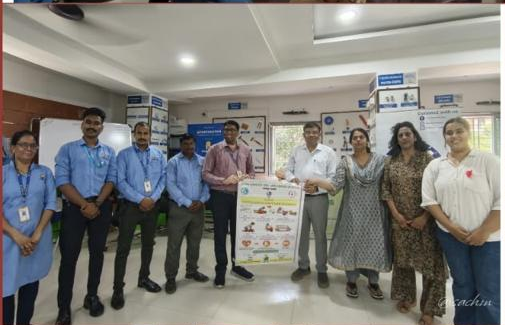
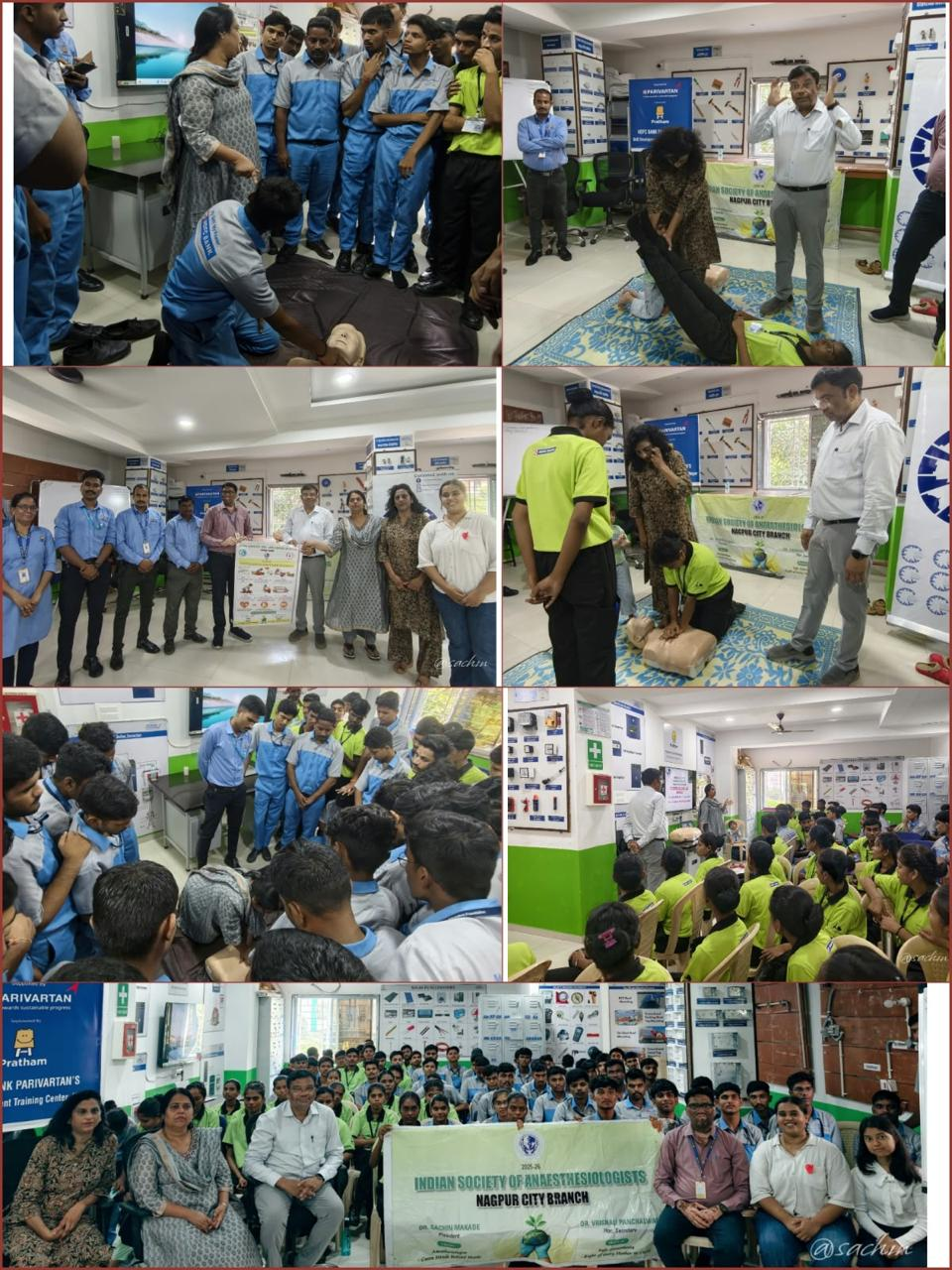
    Nagpur, 10 October 2026: A COLS (Compression-Only Life Support) and Pancharakshak activity was successfully conducted at Pratham Skill Center, Nagpur. The initiative received a positive response, with 75 skilled workers and engineers participating in the session.

    Dr. Sachin Makade, Past President, ISANCB; Dr. Vrishali Panchalwar, Past Honorary Secretary; and Dr. Pooja Kanthawar, Past Executive Member, conducted practical demonstrations to promote awareness of essential life-saving techniques.

    The participants received hands-on demonstrations of chest compressions, with each individual given an opportunity to learn the technique. The session also covered five life-saving skills as part of the Pancharakshak activity.

    The initiative aimed to equip participants with essential life-saving knowledge and practical skills, encouraging them to respond effectively during emergencies. The enthusiastic participation of the skilled workers and engineers contributed positively to the activity.

    Through such initiatives, ISANCB continues to support community awareness and the promotion of life-saving skills beyond the hospital setting.

  • ISANCB Displays CPR Awareness Video at Vigyan Bharati Exhibition in Nagpur

    ISANCB Displays CPR Awareness Video at Vigyan Bharati Exhibition in Nagpur

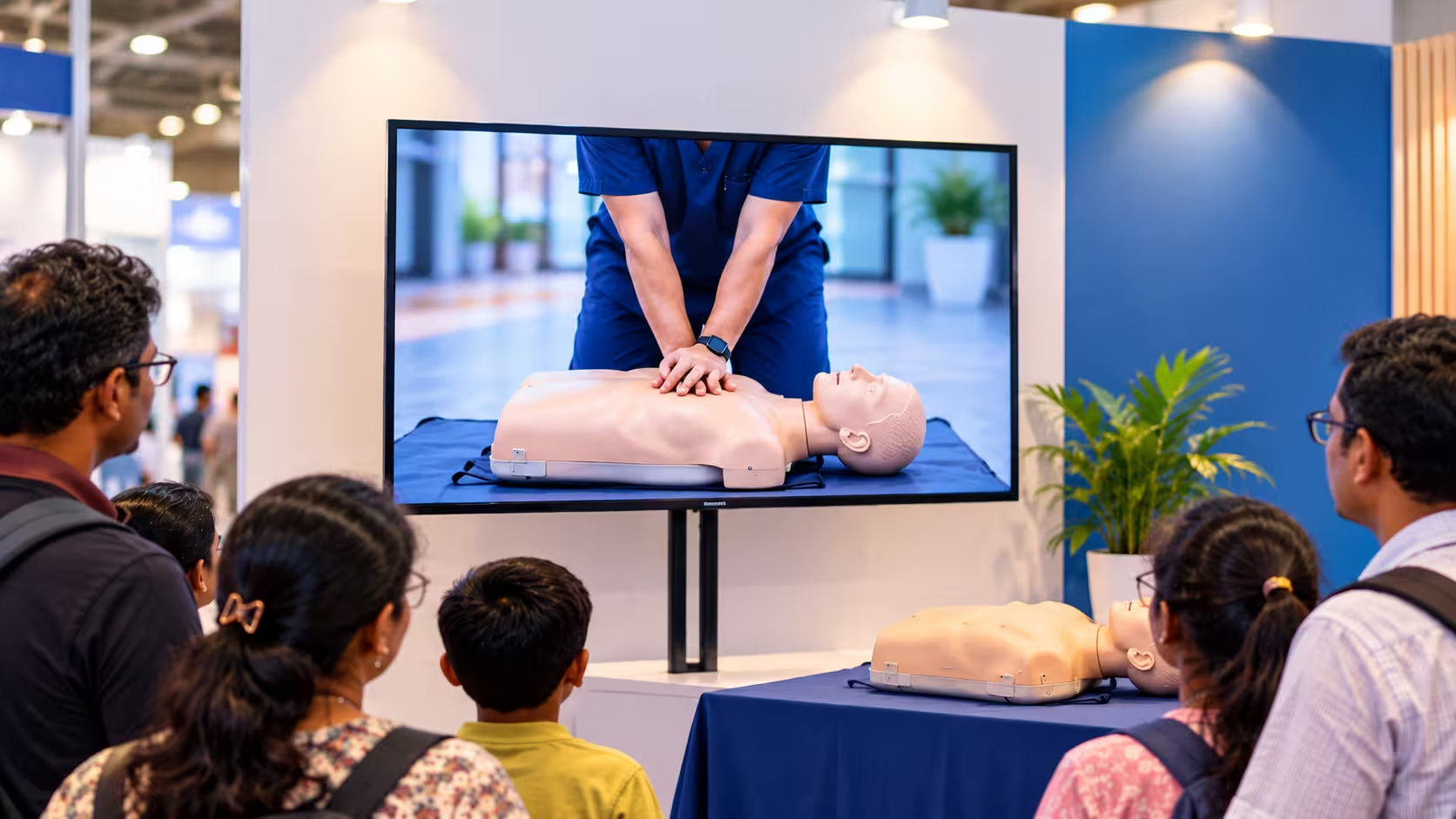
    As part of its public awareness initiatives, the Indian Society of Anaesthesiologists, Nagpur City Branch (ISANCB), displayed a cardiopulmonary resuscitation (CPR) awareness video at the Vigyan Bharati Exhibition on 9 October 2026 in Nagpur.

    The initiative aimed to introduce visitors to the importance of CPR and the need for timely action during cardiac emergencies. Through an educational video presentation, the exhibition provided an opportunity to communicate essential life-saving information to members of the public.

    Promoting Awareness of Life-Saving Skills

    Cardiac arrest can occur unexpectedly, and recognising the emergency and seeking immediate assistance are important first steps. Public awareness of CPR helps people understand the importance of responding quickly while emergency medical help is arranged.

    Displaying the CPR awareness video at the exhibition helped bring life-saving education into a public learning environment, encouraging visitors to become more familiar with emergency response and the value of CPR.

    ISANCB’s Commitment to Community Awareness

    The video display formed part of ISANCB’s broader efforts to promote life-saving awareness beyond hospitals and medical institutions. By participating in public exhibitions and educational activities, the branch aims to make essential health information more accessible to the community.

    The CPR awareness initiative at the Vigyan Bharati Exhibition reflected ISANCB’s continued commitment to public education, emergency preparedness, and the promotion of life-saving skills.

  • ISA–NCB Conducts BLS Training at Lifeline Blood Bank, Nagpur

    ISA–NCB Conducts BLS Training at Lifeline Blood Bank, Nagpur

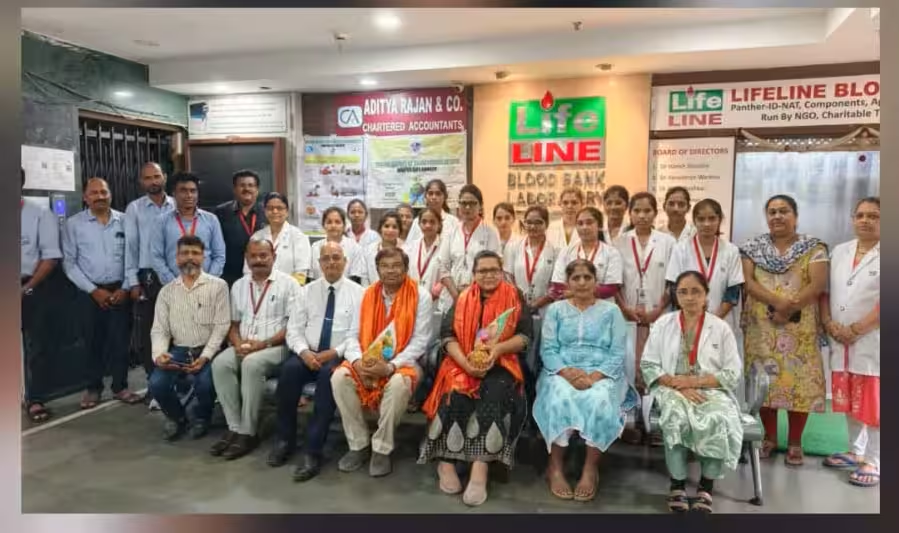
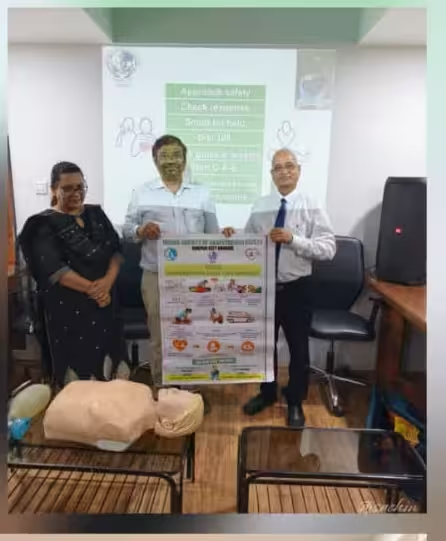
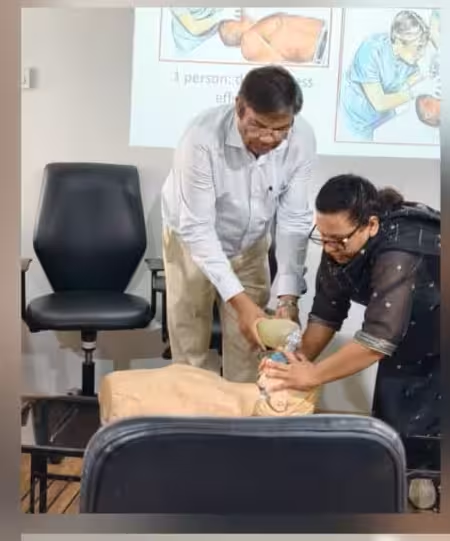
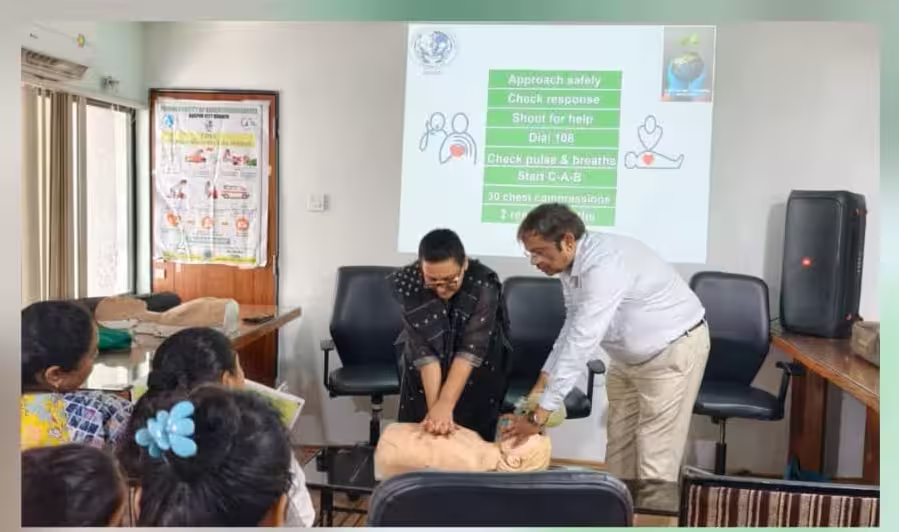
    The Indian Society of Anaesthesiologists – Nagpur City Branch (ISA–NCB) conducted a Basic Life Support (BLS) training program on 27 June 2026 at Lifeline Blood Bank, Ramdaspeth, Nagpur.

    The program was attended by more than 50 participants, who actively participated in the hands-on training sessions designed to enhance their skills in responding to medical emergencies.

    The academic session was led by Dr. Sachin Makade, President, ISA–NCB, and Dr. Pallavi Meshram, Executive Member, ISA–NCB. Along with practical BLS demonstrations on mannequins, the faculty addressed various queries related to medical emergencies that may arise during blood donation camps, providing valuable guidance to participants.

    The event was graced by Dr. Harish Varbhe, Director of Lifeline Blood Bank, who actively participated in the hands-on training and appreciated the initiative to strengthen emergency preparedness among blood bank personnel.

    To support continuous learning, BLS educational charts were donated to the blood bank for future reference and staff training.

    Key Highlights

    • Date: 27 June 2026
    • Venue: Lifeline Blood Bank, Ramdaspeth, Nagpur
    • 50+ participants attended the BLS training
    • Faculty: Dr. Sachin Makade and Dr. Pallavi Meshram
    • Hands-on BLS training on mannequins
    • Discussion on managing emergencies during blood donation
    • BLS charts donated to Lifeline Blood Bank

    The initiative reaffirmed ISA–NCB’s commitment to strengthening emergency response skills, promoting patient safety, and advancing community healthcare education through practical life-support training.

  • ISA–NCB Conducts Practical Oriented Teaching Programme (POTC) 2026 for MD Anaesthesiology Students

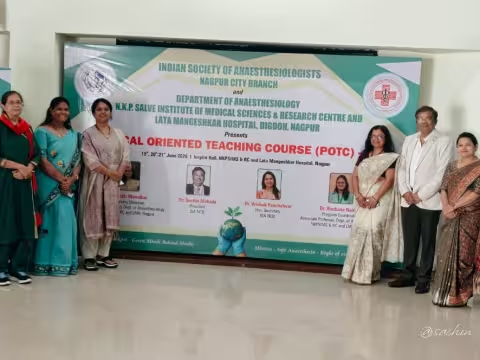
    The Indian Society of Anaesthesiologists – Nagpur City Branch (ISA–NCB) successfully conducted its annual Practical Oriented Teaching Programme (POTC) 2026 from 19th to 21st June 2026 at NKPSIMS & RC and LMH, Nagpur. The programme is a flagship academic initiative designed to prepare MD Anaesthesiology postgraduate students for their final university examinations through intensive practical and viva-based learning.

    The three-day programme was attended by 60 postgraduate students from medical colleges across Nagpur, Wardha, Chandrapur, Gondia, and Amravati, providing them with a comprehensive platform for academic revision and practical skill enhancement.

    Renowned faculty members from various medical colleges delivered expert lectures and conducted interactive sessions on case discussions, anaesthesia instruments, ECG interpretation, investigations, charts, and table viva examinations. The sessions were structured to strengthen clinical reasoning, improve practical skills, and build confidence among students appearing for their final MD examinations.

    The programme was organized under the leadership of Dr. Sachin Makade, President, ISA–NCB, and Dr. Vrushali Panchalwar, Hon. Secretary, ISA–NCB, along with Dr. Ketaki Marodkar, Professor & Head, Department of Anaesthesiology, NKPSIMS, and Dr. Rachana Naitam.

    The event was coordinated by Dr. Poonam Raipurkar and Dr. Sayli Kulkarni, who ensured the smooth execution of the academic sessions.

    The inaugural ceremony was graced by Dr. Kajal Mitra (Dean Academics), Dr. Deosthale, and Dr. Madhur Gupta, who encouraged the students to make the most of the learning opportunity and excel in their professional careers.

    Key Highlights

    • Event: Practical Oriented Teaching Programme (POTC) 2026
    • Dates: 19–21 June 2026
    • Venue: NKPSIMS & RC and LMH, Nagpur
    • 60 MD Anaesthesiology postgraduate students participated
    • Delegates from Nagpur, Wardha, Chandrapur, Gondia, and Amravati
    • Expert sessions on case discussions, ECGs, investigations, instruments, charts, and table viva
    • Organized by ISA–NCB in collaboration with NKPSIMS
    • Coordinators: Dr. Poonam Raipurkar and Dr. Sayli Kulkarni

    The successful conduct of POTC 2026 reaffirmed ISA–NCB’s commitment to academic excellence, postgraduate education, and nurturing the next generation of anaesthesiologists through practical, exam-focused learning.

  • ISA–NCB Promotes Green Anaesthesia on World Environment Day

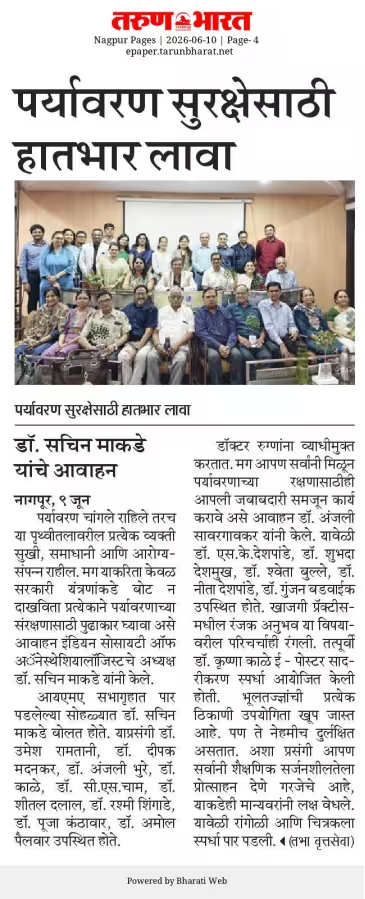
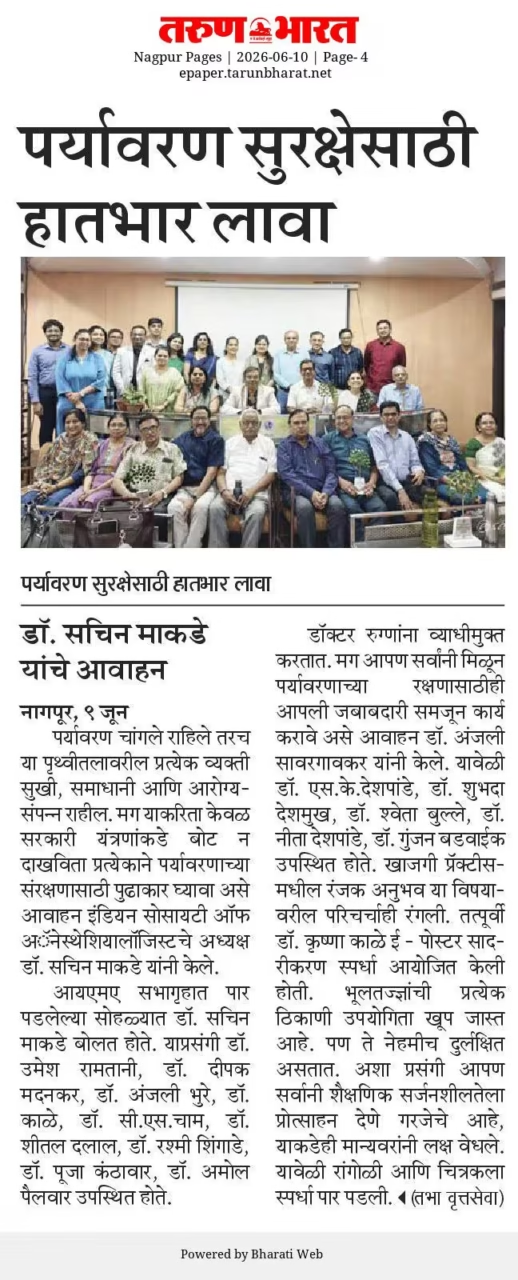
    On the occasion of World Environment Day, the Indian Society of Anaesthesiologists – Nagpur City Branch (ISA–NCB) organized a special awareness programme to promote Green Anaesthesia and encourage environmentally sustainable healthcare practices.

    Addressing the gathering, Dr. Sachin Makade, President of ISA–NCB, emphasized that protecting the environment is a shared responsibility. He highlighted that healthcare professionals can contribute significantly by adopting eco-friendly practices in operating theatres and reducing the environmental impact of anaesthesia services.

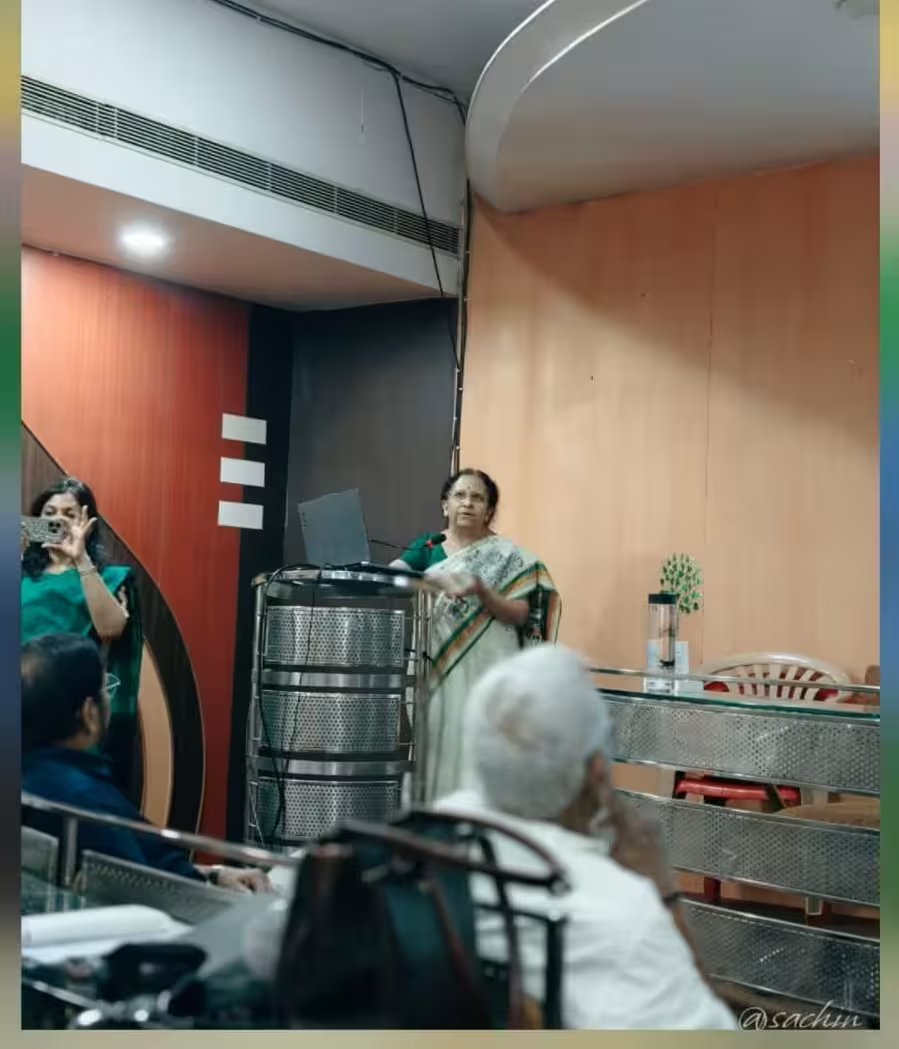
    The keynote lecture, titled “Healing the Earth While Healing Humanity: Our Responsibility Towards Mother Earth,” was delivered by Dr. Anjali Savargaonkar. The session focused on the importance of environmental conservation, sustainable medical practices, and the role of anaesthesiologists in supporting the global green healthcare movement.

    The programme was attended by several senior members of the anaesthesiology fraternity, including Dr. S. K. Deshpande, Dr. Shubhada Deshmukh, Dr. Umesh Ramtani, Dr. Vivek Madankar, Dr. Anjali Bhure, Dr. Kirti Gujarkar, Dr. Shailesh Dalal, Dr. Rashmi Shingade, Dr. P. S. Deshpande, Dr. Nitin Waghmare, Dr. Umesh Jadhav, Dr. Gunjan Badwaik, Dr. Ajit Shende, and Dr. Amol Pailwar, among others.

    The initiative reinforced ISA–NCB’s commitment to integrating environmental sustainability with healthcare excellence, encouraging members to adopt Green OT practices, reduce waste, and support environmentally responsible anaesthesia.

    Key Highlights

    • Occasion: World Environment Day 2026
    • Awareness lecture on Green Anaesthesia
    • Theme: “Healing the Earth While Healing Humanity: Our Responsibility Towards Mother Earth”
    • Address by Dr. Sachin Makade, President, ISA–NCB
    • Expert lecture by Dr. Anjali Savargaonkar
    • Participation of senior anaesthesiologists from Nagpur
    • Promoted Green OT practices and environmental sustainability in healthcare

    The programme reflected ISA–NCB’s vision of combining clinical excellence with environmental responsibility, inspiring healthcare professionals to contribute towards a greener and healthier future.

  • ISA–NCB Celebrates World Environment Day with Green Awareness Activities

    ISA–NCB Celebrates World Environment Day with Green Awareness Activities

    To commemorate World Environment Day, the Indian Society of Anaesthesiologists – Nagpur City Branch (ISA–NCB) organized a series of activities promoting environmental awareness under the theme “Save the Planet Earth.”

    The celebration featured Painting and Rangoli Competitions for ISA–NCB members, encouraging creativity while highlighting the importance of environmental conservation. The event received 12 painting entries and 4 rangoli entries, all of which were evaluated by Dr. Neet Deshpande.

    Competition Winners

    Painting Competition

    • First Prize: Dr. Ketki Ramteke
    • Second Prize: Dr. Bharat Krishnan

    Rangoli Competition

    • First Prize: Dr. Kirti Gujarkar
    • Second Prize: Dr. Sneha Gandhale

    As part of the awareness initiative, Dr. Savargaonkar delivered a thought-provoking lecture titled “Healing the Earth While Healing Humanity: Our Responsibility Towards Mother Earth,” emphasizing sustainable healthcare practices and the importance of adopting green initiatives in daily life and operating theatres.

    The occasion also marked the release of the third edition of the ISA–NCB newsletter, e-Sense, reinforcing the branch’s commitment to environmental responsibility and professional education.

    The event was attended by approximately 100 ISA–NCB members. In his address, Dr. Sachin Makade, President, ISA–NCB, thanked all participants for their enthusiastic involvement and encouraged members to adopt green practices in operating theatres and their everyday lives to contribute towards a healthier planet.

    Key Highlights

    • World Environment Day celebration by ISA–NCB
    • Theme: “Save the Planet Earth”
    • Painting and Rangoli Competitions for members
    • 16 creative entries received across both competitions
    • Environmental awareness lecture by Dr. Savargaonkar
    • Release of the 3rd edition of the e-Sense newsletter
    • Participation of approximately 100 ISA–NCB members

    The celebration reflected ISA–NCB’s vision of promoting environmentally sustainable healthcare while inspiring its members to become ambassadors of the Green OT initiative and responsible environmental stewardship.

  • ISA–NCB Hosts International Webinar on TIVA and Green Anaesthesia

    ISA–NCB Hosts International Webinar on TIVA and Green Anaesthesia

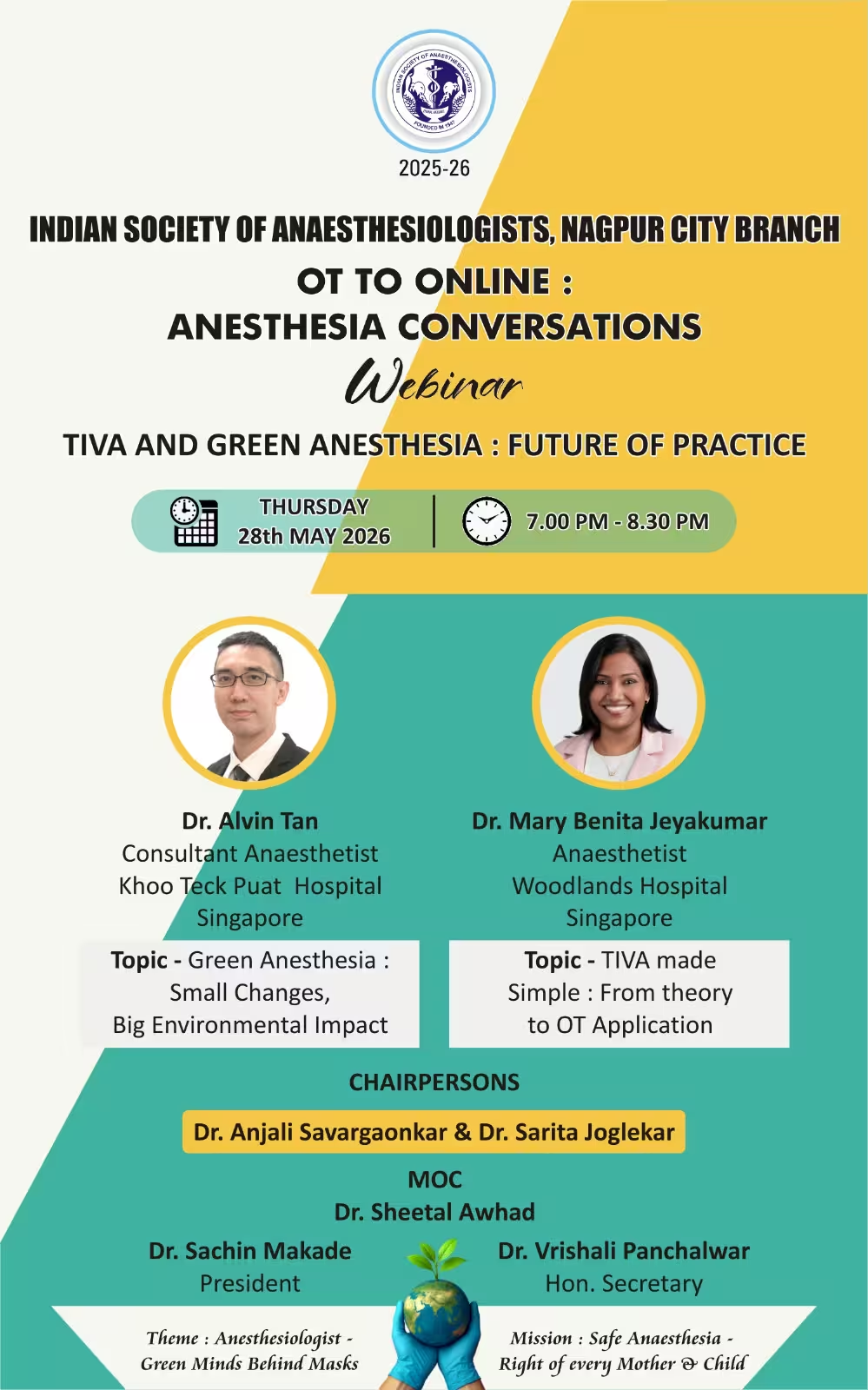
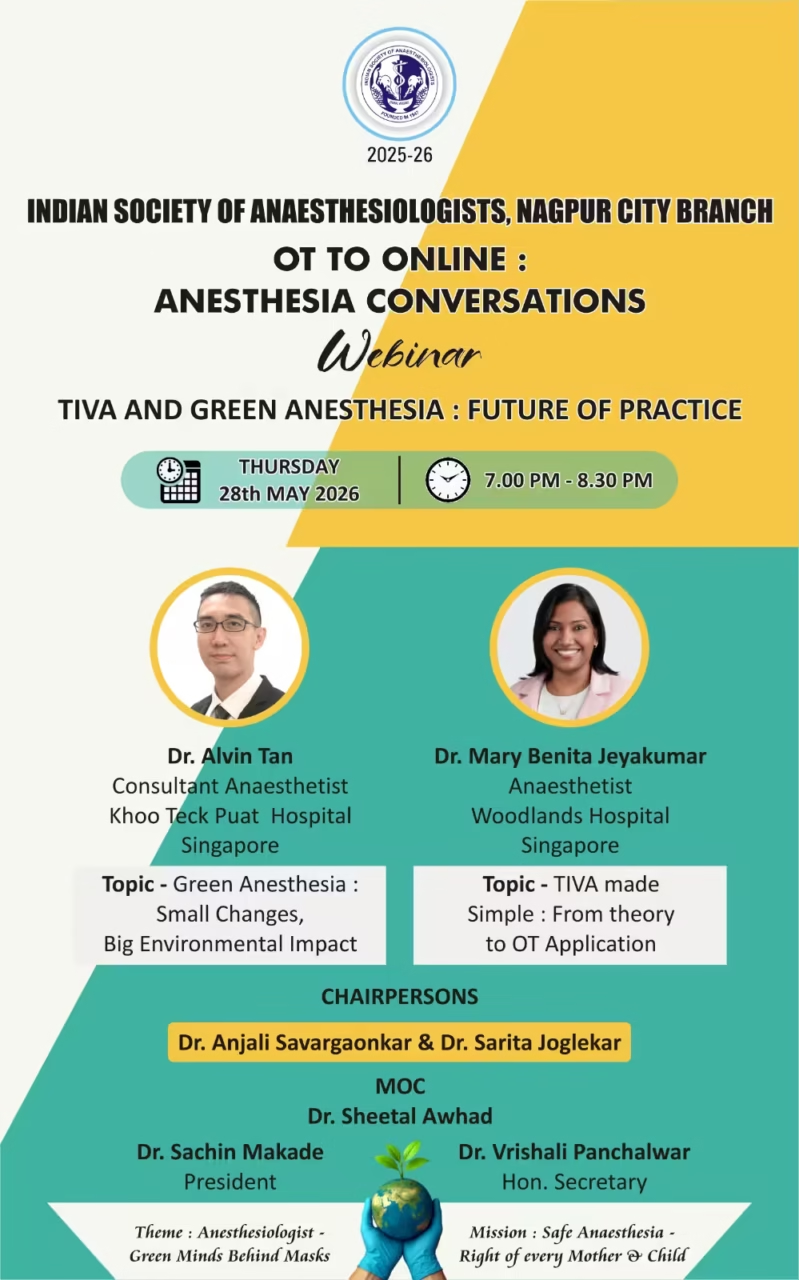
    The Indian Society of Anaesthesiologists – Nagpur City Branch (ISA–NCB) successfully organized an international webinar titled “TIVA and Green Anaesthesia: Future of Anaesthesia Practice” on 28 May 2026 via the Zoom platform.

    The webinar featured two distinguished international speakers from Singapore. Dr. Alvin Tan, Consultant Anaesthesiologist at Khoo Teck Puat Hospital, delivered an enlightening session on “Green Anaesthesia: Small Changes, Big Environmental Impact,” highlighting sustainable practices that can reduce the environmental footprint of anaesthesia while maintaining patient safety.

    The second expert session was presented by Dr. Mary Benita Jeyakumar, Anaesthetist at Woodland Hospital, Singapore, on “TIVA Made Simple: From Theory to OT Application.” Her lecture provided practical insights into the principles, techniques, and clinical applications of Total Intravenous Anaesthesia (TIVA).

    The webinar received an overwhelming response, with 138 delegates participating and benefiting from the informative academic sessions. The program was chaired by Dr. Anjali Savargaonkar and Dr. Sarita Joglekar.

    The event commenced with a welcome address by Dr. Sachin Makade, President, ISA–NCB, and concluded with a vote of thanks by Dr. Leena Ingale, Treasurer, ISA–NCB. The webinar was efficiently coordinated by Dr. Sheetal Awhad, ensuring the smooth conduct of the program.

    Key Highlights

    • International webinar held on 28 May 2026
    • Theme: “TIVA and Green Anaesthesia: Future of Anaesthesia Practice”
    • Expert faculty from Singapore
    • 138 delegates participated
    • Sessions on Green Anaesthesia and TIVA
    • Successfully coordinated by Dr. Sheetal Awhad

    The webinar reinforced ISA–NCB’s commitment to continuous medical education, international academic collaboration, and the promotion of sustainable, evidence-based anaesthesia practices.

  • Dr. Krishna Kale Poster Presentation Competition 2026 Successfully Conducted

    Dr. Krishna Kale Poster Presentation Competition 2026 Successfully Conducted

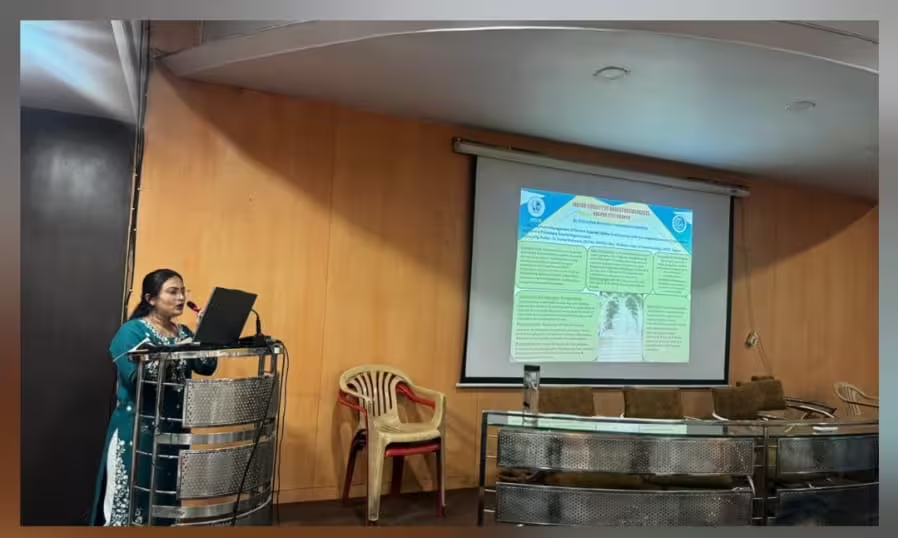
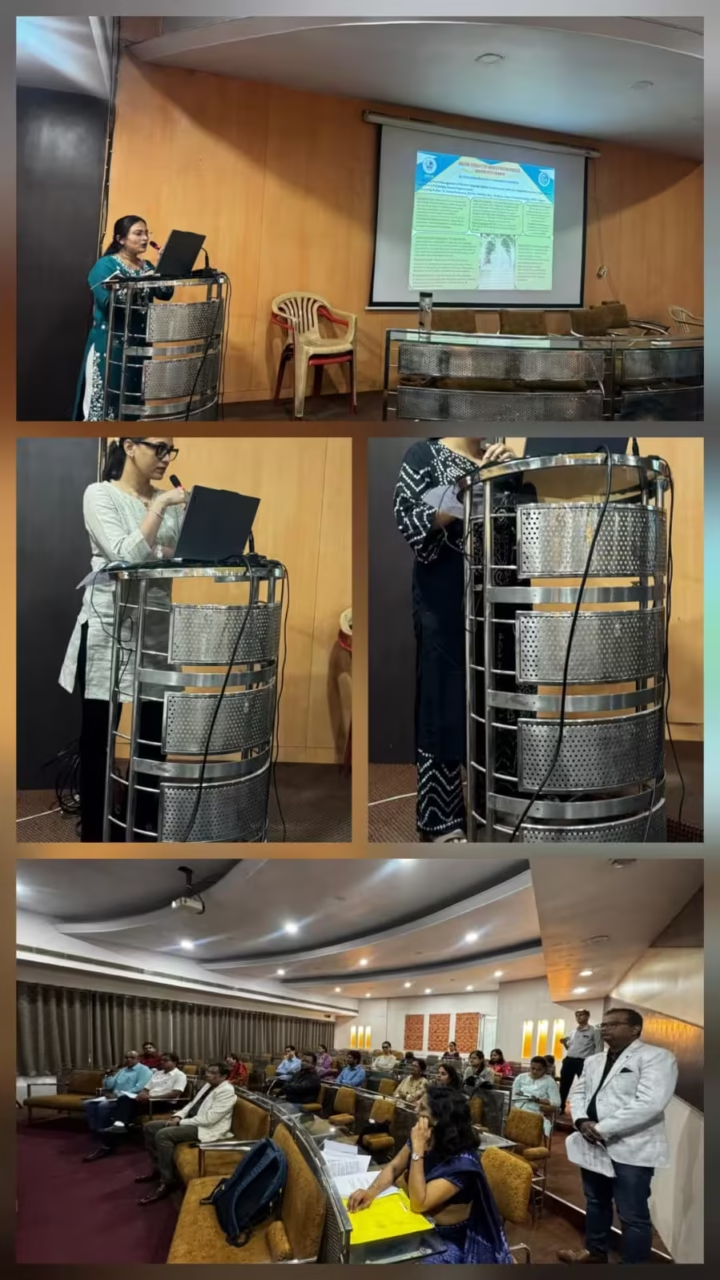
    The Indian Society of Anaesthesiologists – Nagpur City Branch (ISA–NCB) successfully organized the Dr. Krishna Kale Poster Presentation Competition on 5 June 2026, providing a platform for consultant anaesthesiologists to present their research, clinical experiences, and academic work.

    A total of nine consultant anaesthesiologists participated in the competition, showcasing innovative ideas and evidence-based practices that reflected their dedication to academic excellence and professional development.

    The presentations were evaluated by Dr. Umesh Ramtani and Dr. Deepak Madankar, who served as the esteemed judges for the event. Their expert evaluation encouraged high academic standards and constructive learning among participants.

    At the conclusion of the competition, Dr. Ketki Ramteke was awarded the First Prize, while Dr. Dayasagar secured the Second Prize for their outstanding presentations.

    Dr. Sachin Makade, President of ISA–NCB, felicitated all participants and appreciated their enthusiasm, academic contributions, and commitment to advancing the field of anaesthesiology.

    Key Highlights

    • Date: 5 June 2026
    • Event: Dr. Krishna Kale Poster Presentation Competition
    • Nine consultant anaesthesiologists participated
    • Judges: Dr. Umesh Ramtani and Dr. Deepak Madankar
    • First Prize: Dr. Ketki Ramteke
    • Second Prize: Dr. Dayasagar
    • Participants felicitated by Dr. Sachin Makade

    The competition reflected ISA–NCB’s ongoing commitment to promoting research, academic excellence, and knowledge sharing among anaesthesiology professionals.