Category: eSense

  • A Trip Down Memory Lane: The Evolution of Nagpur Anaesthesiologists from Silent Guardians to Perioperative Leaders

    Dr S. K. Deshpande

    MD

    Cardiac Anaesthesiologist, Nagpur
    Introduction: The Birth of a Speciality

    Modern anaesthesia began on 16 October 1846, when William T. G. Morton demonstrated ether anaesthesia. Over time, Anaesthesiology evolved from a supportive service into an independent discipline encompassing perioperative medicine, critical care, pain management, research, education, and healthcare leadership.

    The Early Years: GMC Nagpur and IGGMC

    Government Medical College (GMC), Nagpur, inaugurated by Dr Rajendra Prasad on 27 March 1947, commenced anaesthesia services in 1948 under the Department of Surgery. Dr M. S. Dubey was among its earliest qualified anaesthetists. The Diploma in Anaesthesia (DA) programme began in 1962, followed by the establishment of an independent Department of Anaesthesia in 1965, with Dr Dubey as its first Head. The MD programme commenced in 1972, strengthening postgraduate education. The late Prof. Dr R. K. Pradhan succeeded Dr Dubey in 1973, followed by Prof. Dr H. J. Mankeshwar in 1983.

    At Indira Gandhi Government Medical College (IGGMC), the late Prof. Dr A. A. Ghosh established the Department of Anaesthesia around 1967–68. Both the Diploma and MD programs further strengthened specialist training and healthcare delivery in central India.

    ISA Nagpur City Branch: Building Professional Excellence

    Established in 1973 under Founder President Dr R. K. Pradhan and Founder Secretary Dr H. J. Mankeshwar, the Indian Society of Anaesthesiologists Nagpur City Branch (ISA NCB) has grown from ten founding members to over 450 life members. Its major milestones include its Silver Jubilee in 1998, the inauguration of its first office in 1999, and the successful organisation of the 48th National ISA Conference at GMC Nagpur in December 2000. Nagpur has hosted several significant scientific conferences till date.

    Private Practice and Technological Transformation

    The early private practitioners included Dr N. T. Balankhe, Dr Mrs Pandit, Dr Vinay Waikar, Dr Mrs Iyer, Dr Diyewar, and Dr Apte. In 1975, Dr S. A. Shrirao became Nagpur’s first MD-qualified anaesthesiologist to enter private practice, advocating for professional recognition, fair remuneration, and organised practice through the Association of Private Anaesthesiologists of Nagpur (APAN)

    Early anaesthesia involved limited equipment, ether and trilene, basic ventilation, and monitoring that largely depended on clinical observation. The subsequent introduction of Halothane, Propofol, modern muscle relaxants, pulse oximetry, capnography, mechanical ventilators, advanced airway devices, and ultrasound-guided regional anaesthesia transformed patient safety and clinical practice.

    Super-specialities, Critical Care, and Pain Medicine

    The expansion of complex surgical procedures created new opportunities for specialised anaesthesia practice. Closed mitral valvotomy was first performed by Dr Kalke at IGGMC in 1970 and subsequently by Dr R. N. Das at GMC Nagpur after 1980. Neurosurgery, closed-heart surgery, and paediatric surgery also developed in the private sector during this period. Dr Shrirao, Dr Arvind Joshi, Dr Anil Jain, and Dr Rajurkar were closely associated with the development of these services. Dr Hemant Sane and Dr Vilas Tambe were among Nagpur’s early qualified cardiothoracic and neuroanaesthesia specialists. In September 1985, first open-heart surgery in Central India was performed with Dr S. K. Deshpande, a qualified cardiothoracic and neuroanaesthesiologist, as a member of this pioneering team. Kidney transplantation began in Nagpur around 1995–2000.

    Thereafter, specialised surgical services expanded rapidly across disciplines. Today, complex procedures, including robotic surgeries, are routinely undertaken at GMC Nagpur and in the private sector. These advances would not have been possible without the growing expertise of anaesthesiologists in managing complex physiology, sophisticated monitoring, advanced ventilation, and the perioperative needs of high-risk patients.

    Critical Care: This field expanded through the significant contributions of Dr Arif Husain and Dr Vilas Tambe, among others.

    Pain Medicine: This discipline developed under pioneers including Prof. Dr H. J. Mankeshwar and Dr S. A. Shrirao. Later, specialists like Dr Anjali Kolhe, Dr C. S. Cham, Dr Lawange, and many younger professionals advanced the discipline through clinical work and specialised training. The establishment of the Indian Society for the Study of Pain on 9 April 1984 was an important national milestone. Historical accounts credit Dr H. J. Mankeshwar as Founder President and Dr Shrirao as Founder Secretary in developing the pain speciality in Nagpur.

    Postdoctoral training and fellowships in cardiac, neuro, paediatric, obstetric, transplant, critical care anaesthesia and Interventional pain management further strengthened the speciality.

    Public Awareness and Healthcare Leadership

    Anaesthesiologists extended their responsibilities beyond operating theaters through public education and resuscitation training. Early awareness programs were conducted by Dr Mashankar and Dr Pratibha Deshmukh in 1993. Subsequent initiatives led by Dr Ranjana Deshmukh and Dr Sheetal Dalal promoted anaesthesia awareness and basic life-support training, which included the distribution of 75 AMBU bags.

    Anaesthesiologists also emerged as hospital founders, entrepreneurs, educators, and administrators. Among those establishing hospitals and clinical facilities were Dr Arif Husain, Dr Anil Chande, Dr Anil Jain, Dr Deepak Anjankar, Dr Vilas Tambe, and Dr Khot. The late Dr Shirolkar served as Dean of Sir J. J. Hospital, Mumbai, while Prof. Dr H. J. Mankeshwar became Dean of GMC Nagpur in 1995.

    Conclusion: From Silent Guardians to Perioperative Leaders

    The evolution of anaesthesiology in Nagpur reflects generations of dedication, innovation, and academic commitment. From rudimentary equipment and limited monitoring to robotic surgery, advanced monitoring, and precision-based perioperative care, the speciality has undergone a remarkable transformation. Today, anaesthesiologists are indispensable perioperative physicians, critical care specialists, pain-management experts, educators, researchers, and healthcare leaders. The legacy established by Nagpur’s pioneers continues through the ISA NCB and successive generations committed to excellence, patient safety, and professional advancement.

    Acknowledgements: Sincere gratitude to Dr H. J. Mankeshwar, Dr S. A. Shrirao, Dr Pratibha Deshmukh, Dr Anjali Kolhe, Dr Kiran Vyawahare, Dr Sheetal Dalal, and all colleagues who contributed valuable memories and information to this historical account.

    Note: Some dates and details may require further verification.

    With gratitude to the pioneers, respect for the present generation, and best wishes for the future of anaesthesiology.

  • The EDRA Edge: Simple Ultrasound and Needle Selection Tweaks to Improve Your Block Success Rate Tomorrow

    Dr. Rasika Timane

    MD, IDRA, ESRA-DRA

    Consultant Anaesthesiologist, Nagpur

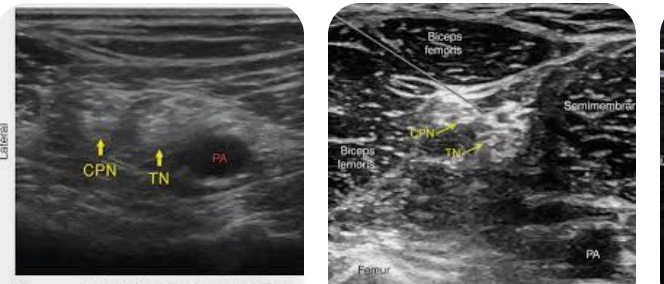
    Ultrasound guidance has made accurate needle placement the standard in regional anaesthesia. A few systematic seconds spent optimising your machine settings, ergonomics and needle choice can turn a blurry screen into a sharp, actionable roadmap — and improve your block success rate as early as tomorrow.

    The use of ultrasound guidance for inserting peripheral nerve blocks has become standard practice, as it allows for more accurate needle placement. Visualising anatomical structures dynamically has largely replaced traditional landmark-based or blind paraesthesia-elicitation approaches, and blind-insertion techniques are increasingly becoming the exception, reserved primarily for rescue scenarios where advanced imaging is unavailable.

    Despite these advancements, regional anaesthesia (RA) carries inherent procedural challenges. Historically, regional techniques relied heavily on subjective sensory feedback, such as the tactile “loss-of-resistance” to air or saline during epidural placement. A primary limitation of blind techniques is that even experienced supervisors cannot objectively verify events at the needle tip. They can never be entirely certain whether a true anatomical compartment or a false loss-of-resistance was felt. This is why training RA techniques in simulation environments remains essential.

    Transitioning to ultrasound guidance introduces its own steep learning curve. Novice learners frequently struggle to distinguish target peripheral nerves from surrounding structures like tendons, blood vessels and muscle groups on grayscale images. Misidentifying target structures can lead to procedural failure, patchy blocks, or serious complications such as intravascular injection and neural injury.

    Consequently, acquiring robust sonoanatomical knowledge and scanning skills remains a major challenge during early procedural training. It is a complex skill to master, but one that yields enormous benefits for the patient. To avoid poor outcomes, clinicians must maintain meticulous attention to detail, ensure continuous visualisation of the needle, and understand common acoustic artifacts.

    Optimising ultrasound machine settings and structural ergonomics can instantly transform a blurry screen into a sharp, actionable roadmap. Taking just a few systematic seconds to calibrate your machine before needle insertion significantly improves needle tracking, clarifies fascial planes, and increases your regional anaesthesia success rate.

    Five Simple Ultrasound Tweaks to Optimise Your Next Nerve Block

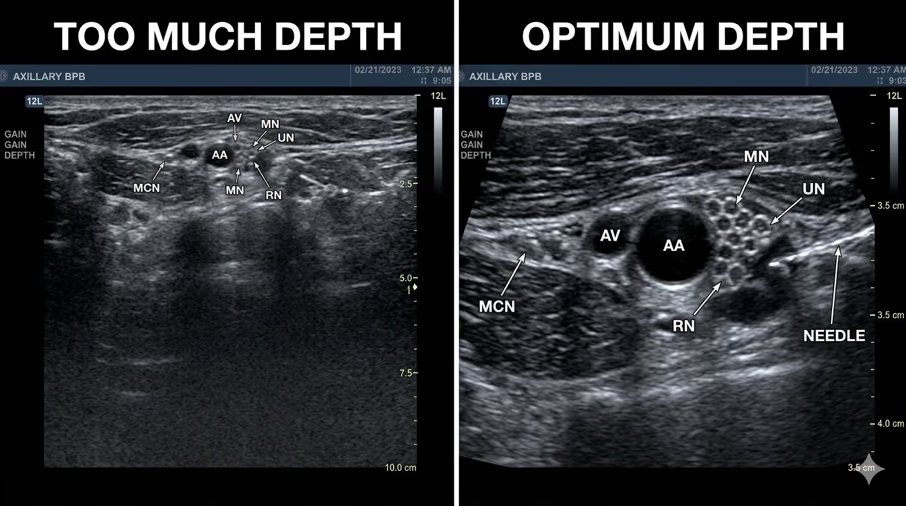
    1. Match the Depth to the Target

    The Tweak

    Fine-tune depth so the target nerve and its immediate anatomical landmarks occupy roughly three-quarters (75%) of the screen.

    How it works

    Leaving the depth too deep wastes valuable screen real estate on deep, irrelevant structures and drops your overall frame resolution. Setting it too shallow risks cutting off vital baseline landmarks or obscuring deeper structures just below your target. Perfect framing maximises your spatial resolution exactly where your needle operates.

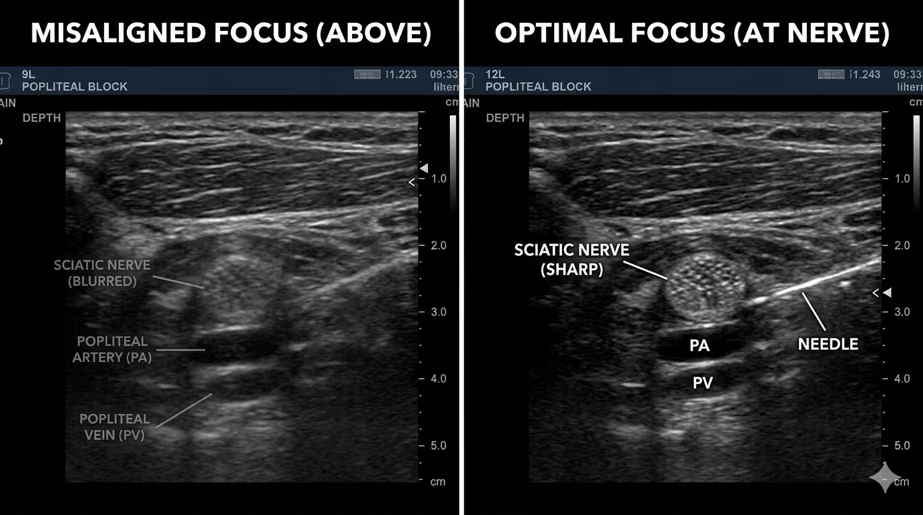
    2. Align the Focal Zone near the Target

    The Tweak

    Locate the focal arrow (caret or dot on the side of your monitor) and move it so it sits at or just below the level of the nerve or fascial interface.

    How it works

    The ultrasound beam is at its narrowest and most concentrated at the level of the focal zone, providing the highest lateral resolution. Aligning the focus ensures optimal granularity, sharpening the boundary between nerve bundles and the surrounding tissue, hence maximising image clarity.

    3. Compress the Dynamic Range

    The Tweak

    Decrease the dynamic range (or log compression) setting to generate a high-contrast image.

    Why it works

    A broad dynamic range displays many shades of grey, which can make the screen look hazy or washed out. Compressing the dynamic range eliminates the muddy mid-tones. It makes your “darks darker” (like anechoic blood vessels) and your “lights lighter”, accentuating the bright, hyperechoic fascial sheets that you need to trace and separate during an injection.

    4. Fine-Tune Overall Gain and Prevent Washout

    The Tweak

    Lower the overall gain until fluid-filled structures (like arteries) are completely black, and tissues have distinct borders. If your machine features Time Gain Compensation (TGC), adjust the individual sliders to balance the brightness evenly from the superficial to the deep fields.

    How it works

    Excessive gain creates an oversaturated, bright white image that blends muscle and nerve tissue together, obscuring the needle tip. Balancing the gain allows you to clearly differentiate subtle tissue layers and maintain steady sight of your needle as it traverses the field.

    5. Establish a Straight “Line of Sight” Ergonomic Alignment

    The Tweak

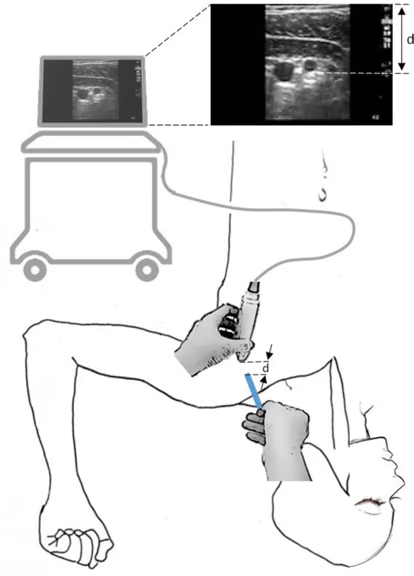
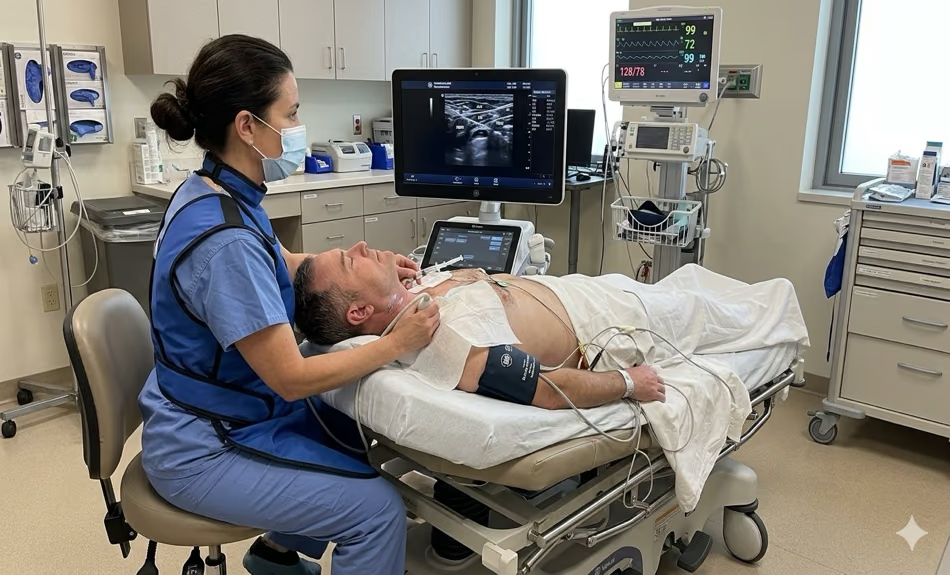
    Position the ultrasound screen directly in front of you, in line with the patient’s target anatomy and your intended needle insertion vector.

    How it works

    If you have to twist your neck or look sideways to see the screen, your hand will naturally drift, throwing off your needle-to-probe alignment. A direct, straight line of sight allows you to make microscopic needle adjustments effortlessly, ensuring you stay perfectly in-plane throughout the procedure.

    Implementing these changes will allow you to enjoy the learning process of acquiring great-quality images of the desired structure, and will help in aligning the needle with the probe, enabling complete visualisation of the needle.

    Needle Selection for Ultrasound-Guided RA

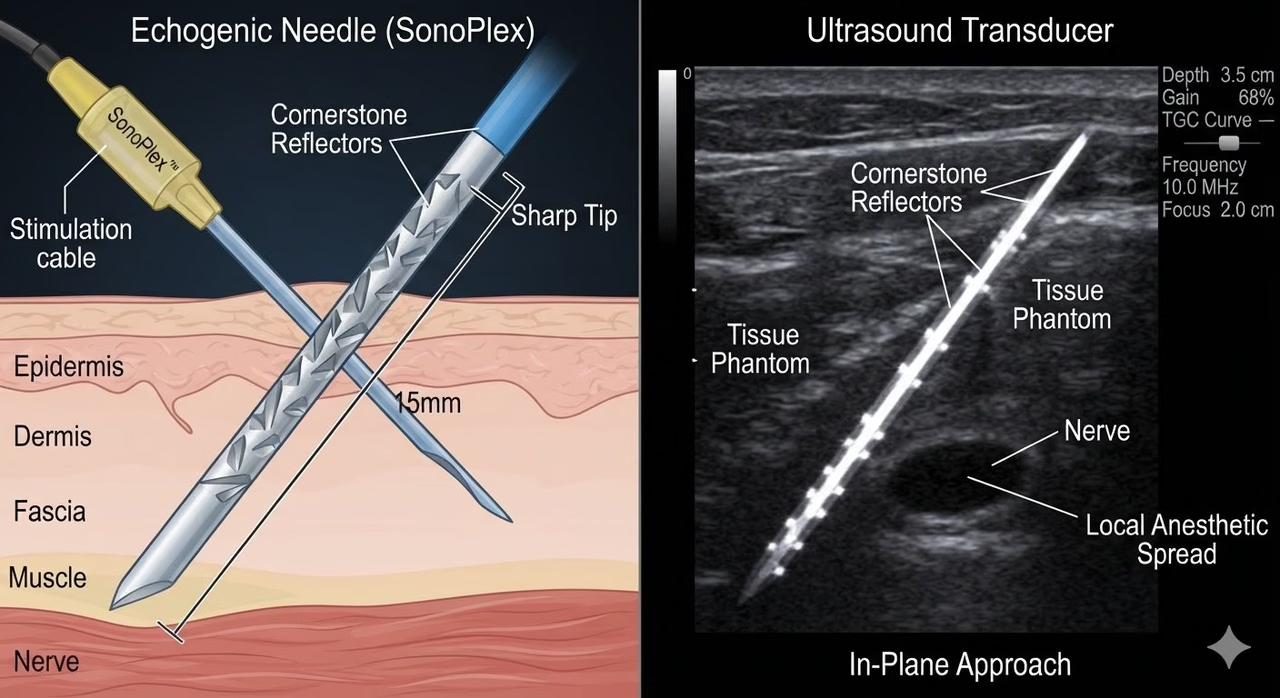
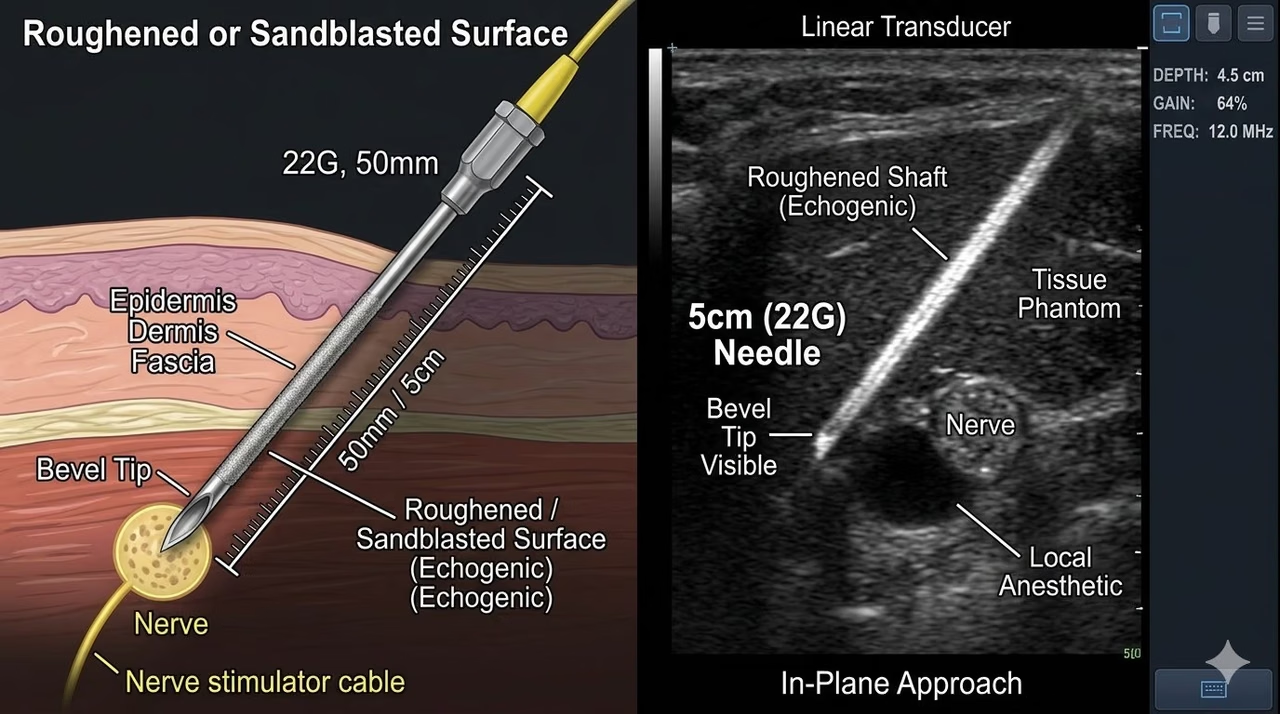
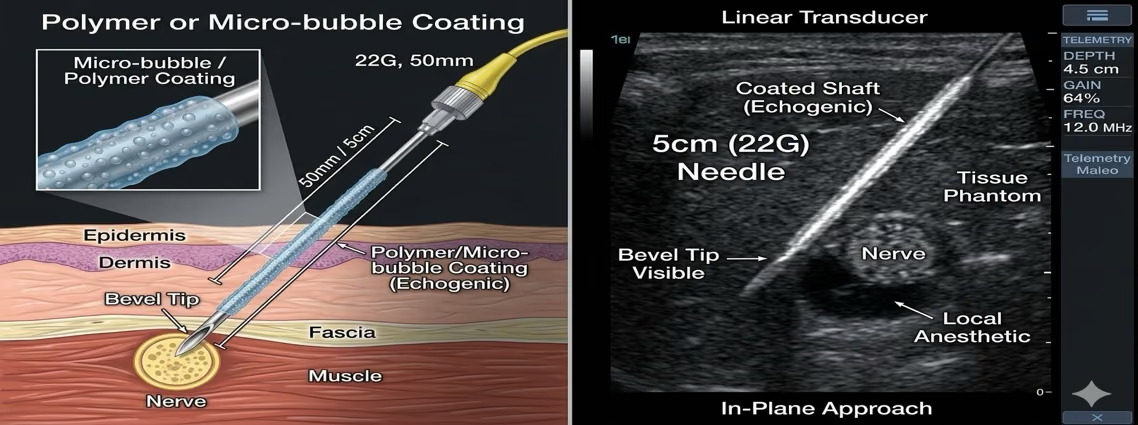
    Echogenic needles for ultrasound-guided regional anaesthesia are needles designed with surface modifications that reflect ultrasound waves back to the transducer, improving visibility at steeper insertion angles.

    Many echogenic needles have electrical insulation along the shaft with an exposed conductive tip, allowing anaesthesiologists to use dual guidance — ultrasound visualisation and peripheral nerve stimulation — when performing specific blocks.

    Types of Surface Modification Technologies

    • Cornerstone Reflectors / Indentations: Micro-machined indentations, dimples, or reflectors stamped near the needle tip (e.g., Pajunk Cornerstone technology) scatter and reflect the ultrasound beam from multiple angles, ensuring high visibility regardless of the insertion trajectory.
    • Roughened or Sandblasted Surfaces: Mechanical alteration of the outer metal surface creates microscopic irregularities that bounce ultrasound waves back more effectively than a polished, smooth standard cannula.
    • Polymer or Micro-bubble Coatings: Thin polymer layers embedded with microscopic gas-filled bubbles or particles (such as NanoLine coatings) enhance the acoustic impedance mismatch between the needle and the surrounding tissue.

    Commercial Examples

    • Pajunk SonoPlex® / SonoTAP®: Features specialised 360-degree corner reflectors stamped into the distal tip area alongside smooth polymer coatings (NanoLine) for optimised gliding and precise nerve stimulation capabilities.
    • B. Braun Stimuplex® echogenic needles and Wygon echogenic needles: Utilise specialised mechanical surface structuring near the tip to boost reflection during both in-plane and out-of-plane approaches.

    Understanding and Troubleshooting Crucial Ultrasound Artifacts

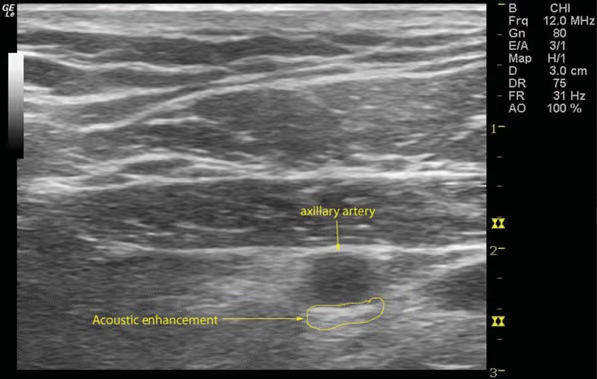
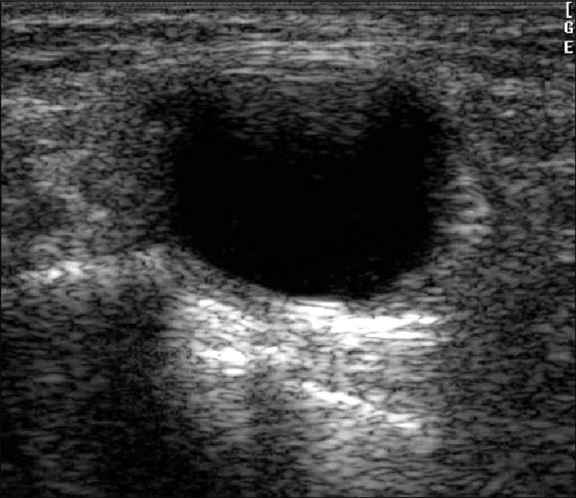
    1. Acoustic Enhancement

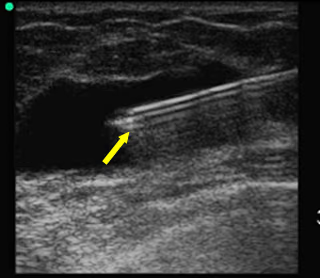
    Acoustic (posterior) enhancement, or enhanced through-transmission, refers to the increased echoes deep to structures that transmit sound exceptionally well. This is characteristic of fluid-filled structures such as arteries, cysts, the urinary bladder and the gallbladder. Fluid in a cyst attenuates sound much less than the surrounding tissue, so it is seen as increased echogenicity (whiteness) posterior to the cystic area.

    Tricks

    To troubleshoot and manage this artifact, adjust the Time Gain Compensation (TGC), change the scanning angle, or use spatial compounding.

    2. Anisotropy

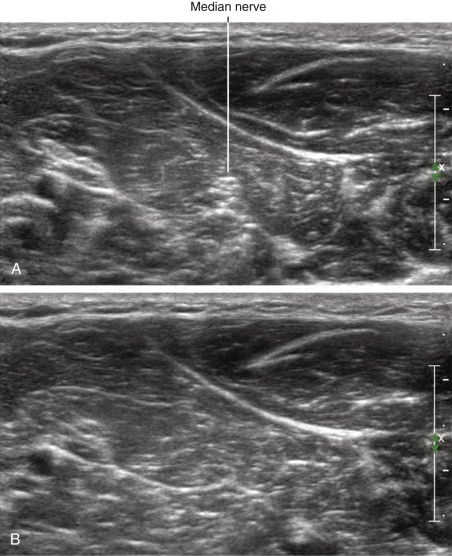
    When the ultrasound beam is incident on nerves such as the median or sciatic, the organised neural elements may reflect a majority of the insonating sound beam in a direction away from the transducer. When this occurs, the transducer will not receive the returning echo and assumes that the insonated area is hypoechoic. This anisotropic effect depends on the angle of the insonating beam. The maximum return echo occurs when the ultrasound beam is perpendicular to the nerve. Decreasing the insonating angle will cause the nerve to change from brightly hyperechoic to darkly hypoechoic. If the angle is then increased, the nerve will again appear hyperechoic.

    Tricks

    Keep the transducer perpendicular (at a 90-degree angle) to the structure of interest so that the sound beam reflects directly back to the probe. Heel-toe manoeuvre: rock the ends of the transducer up or down to align the beam perpendicularly along the longitudinal axis of the nerve. Fanning or toggling: angle the probe from side to side or tilt it slightly without changing the centre point of the base contact on the skin.

    3. Bayonet Artifact

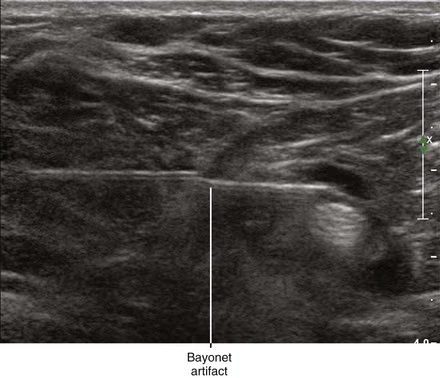
    It is encountered in ultrasound-guided needle techniques and results in the apparent bending of the needle as it passes into or adjacent to tissue with different sound transmission speeds. In constructing an ultrasound image, the machine assumes a constant speed of sound (1540 m/s), but some tissues conduct sound at slightly higher or lower speeds. When the needle passes into a vessel, or a lesion surrounded by fat, there can appear to be bending of the needle towards the transducer (in the case of the vessel) or away from the transducer (in the case of fat).

    Tricks

    Adjust the transducer angle (insonation angle). Tilt or rotate the probe: the artifact is most pronounced when the ultrasound beam is nearly perpendicular to the needle as it crosses into a different tissue medium. Shifting the probe angle dynamically alters the refraction path and can clear up the false bend.

    4. Reverberation Artifact

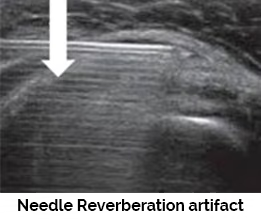
    It occurs when an ultrasound beam encounters two strong parallel reflectors. The beam reflects back and forth between the reflectors (“reverberates”), and the transducer interprets the returning sound waves as deeper structures since it took longer for the wave to return. This creates a series of linear, equally spaced false echoes deeper on the screen.

    Tricks

    Reverberation artifacts can be improved by changing the angle of insonation: tilt or rotate the probe so that reverberation between strong parallel reflectors cannot occur. Lower the near-field gain or overall gain to make the repeated, equally spaced false echoes fade out. Additionally, decrease the transducer frequency or adjust the focus zone to alter how the sound beam interacts with the superficial tissue layers.

    Conclusion

    Implementing these tactical changes will significantly improve the image quality of your structure of interest and clarify your needle path, directly helping the anaesthesiologist improve their success rate. Every practitioner should be intimately familiar with the ultrasound machine’s standard tissue artifacts and the special artifacts associated with needling — mastering how to minimise these anomalies will improve the success rate of your blocks by leaps and bounds.

    1.Ultrasound artifacts
    Last revised by Henry Knipe on 24 Jul 2025 Radiopaedia
    2.Nysora education Ultrasound image artifacts explained
    3.Ultrasound-Guided Regional Anesthesia: Principles of Needle- Tip Tracking and Emerging AI Applications
    Last updated: 02/19/2026
    4. Basic Techniques and Technical Tips for Ultrasound-guided Needle Puncture
    Yozo Sato National Library of Medicine National Center for Biotechnology Intormation Interv Radiol (Higashimatsuyama). 2024 Oct 4;9(3):80–85. doi: 10.22575/interventionalradiology.2023-0047

  • From Clinical Chaos to Corporate Clarity: 3 MBA Lessons Every Anaesthesiologist Needs

    From Clinical Chaos to Corporate Clarity: 3 MBA Lessons Every Anaesthesiologist Needs


    Dr. Shweta Ajay Bulle

    DNB, MBA (HHSM)

    Consultant Anesthesiologist, Indira IVF Hospital Ltd., Nagpur

    Many of the challenges we meet in healthcare cannot be solved by clinical expertise alone. An MBA in Healthcare and Hospital Management taught me to look beyond the case in front of me and understand how the system itself is managed.

    For years, I believed that being a good doctor meant mastering clinical knowledge, making the right decisions under pressure, and ensuring the best possible outcome for every patient. But with experience, I began to realise that many of the challenges I encountered in healthcare could not be solved by clinical expertise alone. I wanted to understand why some systems worked efficiently while others struggled, why patients remembered not only their treatment but also their experience, and why good ideas often failed to translate into meaningful change.

    I realised that if I wanted to be a part of creating change rather than simply adapting to the system, I needed to understand how the system itself was managed. That realisation led me to pursue an MBA in Healthcare and Hospital Management — not to move away from medicine, but to learn how I could contribute to healthcare at a larger level.

    Lesson 1: Healthcare Is a Service — Marketing Meets Service Quality

    One of my biggest MBA realisations was that excellent clinical care is only one part of the healthcare experience. Patients also judge how they are welcomed, informed, heard and cared for. This is where marketing and service quality intersect. Healthcare marketing is not merely about promotion; it is about building trust, understanding patient expectations and creating a strong patient-centred experience.

    As clinicians, we often look at healthcare from the provider’s perspective: Was the diagnosis correct? Was the procedure performed safely? Was the clinical outcome satisfactory? But the patient experiences something much larger — the waiting time, communication, responsiveness of staff, cleanliness, empathy, billing process and the reassurance they receive during an uncertain period. Every one of these touchpoints contributes to how they perceive the organisation.

    I learned that marketing in healthcare is ultimately about creating and delivering a promise of value. A hospital may have excellent infrastructure and highly qualified doctors, but if the patient’s experience does not match that promise, trust is lost. For clinicians, understanding this perspective can transform the way we think about patient satisfaction, loyalty and quality of care.

    Lesson 2: Think Beyond the Case — Understand Finance

    Medicine teaches us to focus on the patient in front of us; an MBA taught me to also look at the resources behind that care. Every clinical decision has an economic dimension — cost, efficiency, resource utilisation and sustainability. Understanding finance does not mean putting profit before patients. It means learning to deliver better value without compromising quality.

    As clinicians, we may not always think about the cost of consumables, utilisation of operating rooms, staffing, inventory, equipment, length of stay or the financial impact of inefficiencies. Yet these factors determine whether a healthcare organisation can continue to invest in technology, infrastructure, people and patient care.

    This is where the principle of Lean became particularly meaningful to me: creating more value for the patient while reducing waste, whether that waste is time, resources, unnecessary movement, waiting or inefficient processes. Lean taught me to look at everyday clinical workflows not merely as routines, but as opportunities to create greater efficiency and better patient outcomes.

    Lesson 3: From Managing Cases to Leading Change

    The biggest lesson was that meaningful change rarely happens through individual effort. Healthcare is a team sport, and anaesthesiologists work at the intersection of surgeons, nurses, technicians, patients and administrators. An MBA helped me understand that leadership is not about authority — it is about influencing people, managing resistance, communicating a vision and bringing teams together towards a common goal.

    In clinical practice, we are accustomed to making decisions quickly and taking responsibility. But organisational change requires something different. It requires listening to people who may not agree with us, understanding why they resist change, communicating the purpose behind a new process and creating ownership within the team. A good idea does not automatically become a successful change; people have to believe in it and participate in it.

    This made me realise that leadership is not something reserved for those sitting in administrative offices. Every clinician who coordinates a team, improves a process, mentors a colleague or speaks up for patient safety is already demonstrating leadership. If we want to change the way healthcare is delivered, we cannot remain only observers of the system; we need to become leaders who can change it.

    My MBA journey has given me much more than an understanding of the corporate world. It has changed the way I look at people, problems, systems and possibilities. I have learned to question what we often accept as “the way things are,” to look beyond the obvious, and to see opportunities for improvement in everyday challenges.

    Final Thought

    For every clinician who believes that healthcare can be better, perhaps the next step is not just to learn more medicine, but to learn how the world around medicine works. Because sometimes, the change we want to see begins with changing the way we see.

  • Defensive Anaesthesia: Myth or Necessity?

    Defensive Anaesthesia: Myth or Necessity?

    Dr. Sarita Joglekar

    MBBS DA, Senior Consultant Anaesthesiologist, National Cancer Institute Jamtha

    Anaesthesiology is a profession where we deal with life and critical situations on a regular basis — in operation theatres and while performing non-operative room anaesthesia in hospital. The stressful workplace and burnout during saving patients’ lives result in great mental and physical overload too.

    Initially the term derived as DM (Defensive Medicine) — that protects doctors from legal liability. The fear of exposure to future medical litigation claims could lead physicians to practice Defensive Medicine. This term was coined in medical research in the United States in the 1960s–1970s.

    I wonder whether this is a necessity or myth, but to a certain extent it may be true due to different reasons — though certainly not true 100%. Let us see the different perspectives while viewing it as a necessity.

    It may manifest in the form of extra tests, procedures, or visits, or in the form of avoiding high-risk patients or procedures, primarily — but not necessarily or solely — to reduce exposure to malpractice liability.

    What is Positive Defensive Medicine?

    When physicians order extra tests or procedures primarily to reduce malpractice liability, they are practising Positive DM (assurance behaviour).

    What is Negative Defensive Medicine?

    Avoidance behaviour indicates obstructing the best possible treatment by either refusing to treat risky patients or resorting to patients’ referral to other clinicians. Both DM and malpractice allegations are known as one of the causes of increasing healthcare costs.

    Anaesthesia practice has also acquired the term “Defensive Anaesthesia”, which stands on similar grounds as Defensive Medicine. Egypt was known to be the best example of DM practice, though no previous study had investigated DM behaviours among Egyptian anaesthesiologists.

    Most healthcare professionals practise DM unintentionally without considering the legal consequences. As anaesthesiology carries inherent high risks related to airway, cardiac, and neurological functions, the fear of litigation often drives practitioners to alter their clinical decisions.

    The Two Types of Defensive Anaesthesia

    1. Positive (Assurance) Defensive Anaesthesia

    This involves ordering extra, often clinically unjustified, tests, consultations, or prescribing extra medications to deter potential legal action. Examples include:

    • Over-monitoring: Using complex or invasive monitoring equipment for low-risk procedures.
    • Hyper-documentation: Spending disproportionate time over-emphasising lengthy informed consent forms or exhaustive charting solely for legal protection.
    • Unnecessary Consults: Referring patients to other specialists even when the anaesthesiologist is fully capable of assessing the risk.

    2. Negative (Avoidance) Defensive Anaesthesia

    This occurs when a clinician actively avoids or obstructs potentially necessary care to minimise legal risk. Examples include:

    • Patient Avoidance: Refusing to administer anaesthesia to high-risk patients (e.g., those with severe underlying comorbidities) who might be the most in need of surgery.
    • Procedure Avoidance: Avoiding complex, specialised, or high-risk anaesthetic techniques that could be the most effective for a patient.

    Is Defensive Anaesthesia Legally Required?

    No, defensive anaesthesia is not legally required. In fact, “defensive medicine” — the practice of ordering tests, prescribing extra medications, or performing procedures primarily to protect against potential malpractice lawsuits rather than for the patient’s benefit — is generally not recognised as a valid legal defence.

    Legally, anaesthesiologists are required to provide the accepted standard of care that a reasonably prudent and qualified practitioner would deliver under similar circumstances.

    While defensive interventions are not mandated by law, the reality of medical malpractice litigation has led many anaesthesiologists to adopt specific “defensive” practices. The practice is influenced by a complex interplay of factors including the legal environment, clinical uncertainty, and risk management. It represents a significant burden on healthcare systems, leading to resource waste, potential patient harm from over-diagnosis, and moral distress among health professionals.

    Egyptian Study Findings

    • Positive Defensive Anaesthesia: 100% prevalence
    • Most reported Negative Defensive Anaesthesia: 91.3%
    • Least reported Negative behaviour — Avoiding critical patients: 58.8%

    Indian Scenario

    Specific national percentage data tracking the exact overall prevalence of defensive anaesthesia practices in India is limited, but regional studies and national surveys highlight related metrics. For instance, 42% of respondents in a nationwide survey by the Indian Society of Anaesthesiologists reported performing over 60% of surgeries under regional anaesthesia — often driven by safety and risk-reduction choices. We need more surveys for percentage calculation in the Indian scenario.

    Impact on Professional Wellbeing and Patient Outcomes

    1. Professional Wellbeing: Egyptian studies indicate that high levels of defensive medical practice are associated with increased anxiety among clinicians and can negatively impact the physician–patient relationship, potentially reducing provider empathy and patient satisfaction.
    2. Physiological Stress: Deviating from individualised anaesthetic depths can increase the burden on the cardiovascular and respiratory systems, potentially leading to fluctuations in blood pressure or longer recovery times.
    3. Impact on Recovery Outcomes: Research continues to explore how different anaesthetic techniques and depths affect physiological systems like cellular immunity — particularly regarding its potential influence on long-term recovery for patients with complex health histories.
    4. Procedural Risks: Opting for less tailored approaches can sometimes increase the risk of standard complications, such as respiratory challenges related to prolonged mechanical ventilation or immobility-related risks like deep vein thrombosis.

    The Indian setup holds the same perspective, but regional anaesthesia has taken the lead in performing critical cases as per clinical need.

    Systemic and Professional Impact

    While defensive anaesthesia helps mitigate the legal anxiety of the practitioner, it has notable drawbacks for the healthcare system as a whole:

    • Increased Healthcare Costs: Unnecessary tests, prolonged hospital stays, and extra medications drive up the overall cost of surgery.
    • Resource Allocation: Extra tests and prolonged monitoring tie up hospital resources and can delay care for other patients.
    • Patient Risks: Unnecessary tests or procedures can sometimes carry their own minor risks or false positives, leading to a cascade of further unwarranted interventions.

    Conclusion

    Defensive Anaesthesia is not an absolute myth — but it is only a partial necessity as far as Indian anaesthesiologists are concerned. We follow protocol-based investigations, and ISA is active in publishing guidelines for investigations at PAC. Only critical cases and long-duration surgeries are investigated more in view of the morbidity and mortality associated with them. Negative defensive anaesthesia is rare, but sometimes an anaesthesiologist may choose it when not confident to administer anaesthesia for a critical patient.

  • Can an Anesthesiologist Refuse a Case? Ethical and Legal Aspects in India

    Can an Anesthesiologist Refuse a Case? Ethical and Legal Aspects in India


    Dr. Sachin Jambhorkar

    MBBS,MD (Anaesthesiology)- Consultant Anaesthesiologist and Pain Specialist at National Cancer Institute,Nagpu

    Yes, an anesthesiologist can refuse a case. Whether it is justified depends on the reason for refusal, the clinical setting, and whether proper arrangements are made for the patient’s continued care.

    In India, this is governed by the NMC Registered Medical Practitioner (Professional Conduct) Regulations, 2023, which replaced the earlier MCI Code of 2002.

    1. Ethical grounds where refusal is generally acceptable

    • Patient safety / inadequate resources: If essential equipment, trained support staff, ICU backup, blood products, or drugs required for safe anesthesia are unavailable. The principle of non-maleficence — “do no harm” — takes priority.
    • Beyond scope of competence: If the case requires a sub-specialty skill you do not possess and no qualified colleague is available. Referring to an appropriate expert upholds beneficence.
    • Impairment: If you are unwell, intoxicated, or excessively fatigued to the point of compromising judgment. Practicing under intoxication is considered professional misconduct under NMC rules.
    • Violence or abuse: NMC 2023 permits refusal when patients or attendants are abusive, unruly, or violent. You must document the incident, report it, and arrange referral.
    • Conscientious objection: For elective procedures that conflict with personal beliefs. This is acceptable only if you inform the team early and ensure referral to another provider.

    2. Ethical grounds where refusal is not acceptable

    • Discrimination: You cannot refuse care based on religion, caste, gender, disability, financial status, HIV status, or any other protected characteristic. This violates the principle of justice and NMC ethics.
    • Life-threatening emergencies: NMC states that doctors have the right to choose patients except in emergencies. An emergency means any condition threatening life or limb. In such situations you have a duty to stabilize the patient.
    • Patient abandonment: Even when refusing, you cannot simply withdraw. NMC mandates that “the patient must not be abandoned.” You must hand over care to another qualified anesthesiologist, surgeon, or facility.

    3. Legal aspects in India

    • Duty of care: Once you have accepted responsibility for a patient, leaving without a proper handover can be construed as negligence or abandonment.
    • Jacob Mathew guidelines, 2005: Courts assess medical negligence based on “gross negligence” — an act that no reasonably prudent professional would commit. Unjustified refusal in an emergency, or walking out mid-case, can lead to civil or criminal liability.
    • Documentation: If you refuse due to safety concerns or violence, record the reason clearly, notify the surgeon and hospital administration, and ensure referral. Proper documentation is your strongest legal protection.
    • Non-payment of fees: You may refuse to continue elective treatment if agreed fees are not paid, but this does not apply in government hospitals, emergencies, or if it results in abandonment.

    A recent Supreme Court judgment also clarified that liability depends on whether you were on duty and whether you exercised the “reasonable care” expected of a professional. Off-duty telephonic advice alone, without direct control over treatment, was not held to be criminally liable.

    4. How to refuse ethically and legally

    1. Assess early: Make the decision before induction, not after premedication.
    2. Communicate clearly: Explain the reason to the surgeon, patient, and attendants in a professional manner.
    3. Document everything: Note the reason in the patient record and file an incident report if needed.
    4. Ensure continuity of care: Arrange an alternative anesthesiologist or transfer to a center with the required facilities.
    5. Follow institutional policy: Adhere to your hospital’s escalation and refusal protocols.

    Bottom line

    Refusal is ethically and legally justified when it is based on patient safety, lack of competence, or threat to personal safety. It is not justified for discrimination or in emergencies without ensuring proper handover. The guiding principles remain beneficence, non-maleficence, autonomy, and justice, along with NMC’s core directive: do not abandon the patient.

    If you are dealing with a specific case, review your hospital’s bylaws and consult your HOD or medicolegal department.

  • Operation Theatre Disasters: Who is Legally Responsible?

    Operation Theatre Disasters: Who is Legally Responsible?


    Dr. Vikram Alsi

    MBBS, DA Anaesthesia Consultant

    Operation theatre disasters raise a recurring question in medical law: when a patient suffers harm during surgery, who is legally responsible? Law does not impose liability merely because a bad outcome occurred — it requires proof that the conduct fell below the standard of care expected of a reasonably competent medical professional.

    The controlling framework in India draws from Jacob Mathew v. State of Punjab, where the Supreme Court stressed that criminal liability for medical negligence requires gross negligence or recklessness, not a mere error of judgment. This article argues that responsibility in operation theatre disasters is best allocated by identifying the source of the failure: hospital infrastructure, pre-operative assessment, patient selection, anaesthetic technique, or surgical technique.

    Legal Framework

    The Supreme Court has repeatedly held that medical negligence is tested against the standard of a reasonably competent practitioner acting with ordinary skill and care. In civil and consumer proceedings, the inquiry is whether there was deficiency in service or breach of the duty of care; in criminal proceedings, the threshold is higher and gross negligence must be shown. The consumer law dimension is significant because medical services fall within consumer protection, so a patient may seek compensation against both the hospital and the treating doctor where deficiency is proved.

    Two decisions are especially important. In Indian Medical Association v. V.P. Shantha [(1995) 6 SCC 651], the Supreme Court held that medical services are ordinarily amenable to consumer jurisdiction, subject to recognised exceptions. In Jacob Mathew v. State of Punjab [(2005) 6 SCC 1], the Court clarified the criminal law standard and cautioned against casual prosecution of doctors for unintended adverse outcomes. Later cases, including Kusum Sharma v. Batra Hospital & Medical Research Centre [(2010) 3 SCC 480], reaffirm that an adverse result does not by itself establish negligence; courts must distinguish between a mishap and a proven breach of duty.

    Infrastructure Failures

    Where the operation room lacks essential equipment, drugs, monitoring devices, or basic safety support, the primary legal responsibility usually lies with the hospital owner and management. This is because the institution has a non-delegable duty to maintain a safe clinical environment, and a systemic deficiency cannot ordinarily be shifted entirely onto the operating doctor. The absence of a defibrillator, warmer, resuscitation support, or other indispensable OT resource may therefore found liability against the hospital, particularly if the defect was known, persistent, and avoidable.

    That said, a doctor is not always absolved merely because the failure is infrastructural. If the anaesthetist or surgeon knew of the deficiency, failed to bring it to the notice of management, or proceeded without adequately informing the patient, individual responsibility may arise. In a strong case for the defence, the hospital would have to show that the patient and relatives were aware of the limitation, that they understood the risk, and that proceeding was nevertheless a conscious and informed choice.

    Pre-operative Evaluation

    Failures in patient evaluation, pre-anaesthetic testing, optimisation, or medication review usually fall most directly on the anaesthetist. Pre-operative assessment is not a routine formality; it is a substantive clinical duty because it determines whether the patient can safely undergo surgery and what precautions are needed. If the patient was not adequately examined, comorbidities were missed, or relevant medicines were not stopped or optimised, the liability case becomes much stronger against the clinician responsible for that assessment.

    The legal analysis is still fact-sensitive. If the anaesthetist reasonably relied on incomplete or misleading information supplied by others, responsibility may be shared, but that does not eliminate professional accountability where the omission was one that a reasonably competent anaesthetist should have detected.

    Patient Selection

    Patient selection problems arise when surgery is undertaken despite clear contraindications or when the patient is not a suitable candidate for the chosen procedure. Responsibility here may lie with the surgeon, the anaesthetist, or both, depending on who controlled the decision and what each professional knew. The legal question is not whether the case became complicated later, but whether the original decision to operate was itself defensible by accepted medical standards.

    A useful analytical point is that the defence must usually show that the patient was selected after proper evaluation and that proceeding was consistent with responsible medical opinion. This reflects the principle that courts do not substitute their own view for that of competent medical experts unless the choice made was plainly unreasonable.

    Anaesthetic Technique

    Complications such as total spinal block, local anaesthetic systemic toxicity, airway mishandling, or other block-related catastrophes require especially careful legal representation. The principal responsibility generally lies with the anaesthetist, because the technique chosen, the dose administered, the monitoring used, and the rescue measures available are all part of the anaesthetic duty of care.

    However, the mere occurrence of a recognised complication does not establish negligence. The courts would ask whether the technique used was an accepted method supported by a responsible body of medical opinion in that region and context, and whether the anaesthetist acted with appropriate skill and judgment. If the method was within accepted practice, properly indicated, and the complication was a known risk despite due care, liability may not arise. But if the choice was experimental, unsupported, or plainly unsafe, responsibility can rest squarely on the anaesthetist.

    Surgical Technique

    Where the complication arises from an intra-operative mistake, an unnecessary procedure, or careless operative handling, the surgeon is ordinarily the primary person answerable. The law distinguishes between a known complication and a negligent act: a recognised risk, even if serious, is not the same as an avoidable error. The surgeon must therefore show proper indication for surgery, informed consent, adherence to accepted operative technique, and an appropriate response when complications occur.

    The strength of the claim increases if the operation performed was the wrong procedure, the wrong side was operated on, a technique was used without adequate justification, or basic intra-operative precautions were omitted. In Kusum Sharma, the Supreme Court emphasised that the burden remains on the claimant to establish negligence and that courts must be cautious not to confuse an adverse result with culpability.

    Hospital Liability

    Operation room disasters often generate not only individual negligence claims but also institutional liability. Under Indian law, hospitals may be vicariously liable for the negligence of employed doctors, nurses, and other staff, and they may also be directly liable for unsafe systems, poor protocols, or deficient infrastructure. This is particularly important in OT cases because many harms arise from a combination of clinical and administrative failures.

    Spring Meadows Hospital v. Harjol Ahluwalia is widely cited for the proposition that hospitals can be held vicariously responsible for the negligence of their staff. Thus, a plaintiff need not always isolate a single wrongdoer; the hospital may be made answerable where its system enabled the injury or where its staff acted negligently in the course of employment.

    Criminal and Civil Liability

    The civil or consumer forum inquiry is whether there was deficiency in service, while the criminal law inquiry is whether the conduct reached the level of gross negligence or recklessness. Jacob Mathew is central because it protects doctors from criminal prosecution for mere mistakes, while still allowing liability where the conduct is so gross that it becomes blameworthy in the criminal sense.

    This distinction matters greatly in OT disasters, because many cases involve tragic outcomes but not necessarily criminal fault. Accordingly, an anaesthetist who chooses a recognised but less common technique may not be negligent if the choice is medically defensible and adequately documented. Likewise, a surgeon is not liable simply because a known complication occurred despite due care. The decisive issue is whether the professional failed to act as a reasonably competent practitioner would have acted in the same circumstances.

    Conclusion

    The legal responsibility for operation room disasters in India is best understood as a multi-factorial one. Infrastructure failures usually point toward the hospital; pre-operative evaluation failures usually point toward the anaesthetist; and operative mistakes usually point toward the surgeon — though liability may be shared where more than one factor contributed to the harm. The controlling legal standard remains that negligence must be proved; courts will not impose liability merely because surgery ended badly or because a complication was serious.

    Bibliography

    • Indian Medical Association v. V.P. Shantha, 1996 AIR 550; (1995) 6 SCC 651 — medical services as “service” under consumer law.
    • Jacob Mathew v. State of Punjab, (2005) 6 SCC 1 — gross negligence as the standard for criminal liability.
    • Kusum Sharma v. Batra Hospital & Medical Research Centre, (2010) 3 SCC 480 — distinction between complication and negligence.
    • Spring Meadows Hospital v. Harjol Ahluwalia, (1998) 4 SCC 39 — hospital responsibility and compensation in medical negligence.
    • Indian Journal of Anaesthesia, “Legal Aspects of Anaesthesia Practice”.
    • Indian Journal of Anaesthesia, “Medico-legal and ethical issues in anaesthesiology”.
  • From Pandemic to Planet Damage: The Environmental Side of COVID-19

    Dr. Bhuvaneswari Balasubramanian

    MD, PDCC (Paediatric Anaesthesiology), IDRA, ESRA-DRA

    Associate Professor, Department of Anaesthesiology, AIIMS Nagpur

    The COVID-19 pandemic will be remembered as one of the defining public health crises of our generation. For anaesthesiologists, it transformed everyday practice almost overnight. Airway management became a high-risk procedure, PPE became part of our professional identity, ICUs expanded beyond their usual boundaries, oxygen became a national concern, and infection control entered every conversation in the operating room. Yet, as the acute crisis slowly receded, another quieter question emerged: what was the environmental cost of our pandemic response?

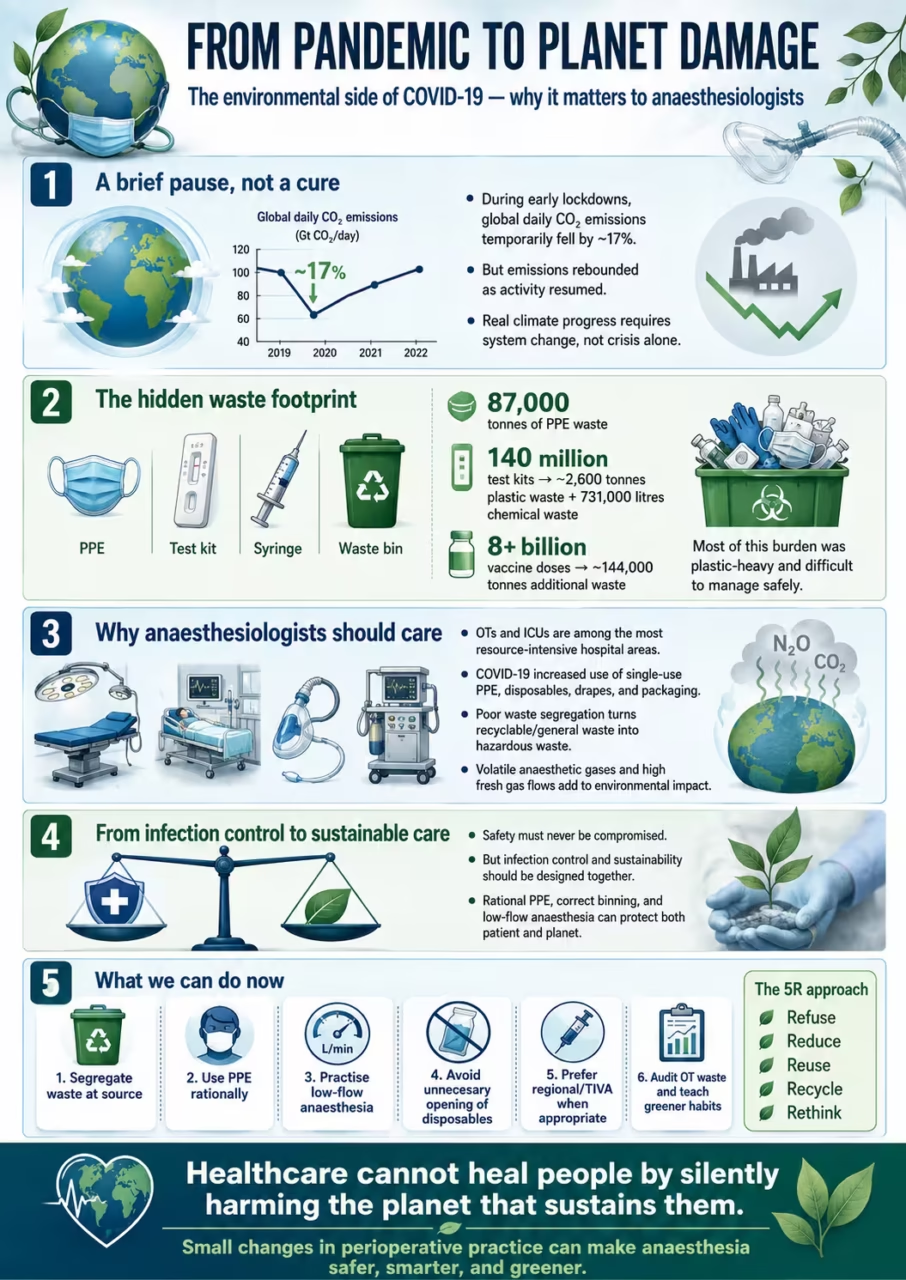
    At first glance, COVID-19 appeared to give the planet a brief pause. During lockdowns, roads emptied, flights were grounded, industrial activity slowed, and several cities reported visibly cleaner skies. Le Quéré et al. estimated that global daily CO₂ emissions temporarily fell by approximately 17% during the early lockdown period compared with 2019 levels.¹ However, this was not true environmental recovery; it was a short-lived reduction caused by crisis, immobility, and economic disruption. As human activity resumed, emissions rebounded. The pandemic reminded us that environmental progress cannot depend on suffering or shutdowns. It requires deliberate, sustained, system-level change.

    The more lasting environmental legacy of COVID-19 was far less visible: the enormous burden of healthcare waste. The World Health Organization estimated that approximately 87,000 tonnes of PPE procured through a United Nations emergency initiative between March 2020 and November 2021 would eventually become waste. In addition, more than 140 million test kits generated about 2,600 tonnes of mainly plastic waste and 731,000 litres of chemical waste. Over 8 billion vaccine doses administered globally produced nearly 144,000 tonnes of additional waste in the form of syringes, needles, and safety boxes.² These figures did not include PPE procured outside the UN system or disposable masks used by the general public, meaning the true environmental burden was probably much higher.²

    India experienced this challenge acutely. COVID-19-related biomedical waste rose sharply during peak waves. A Centre for Science and Environment assessment reported that India generated 45,954 tonnes of COVID-19-related biomedical waste between 1 May 2020 and 10 May 2021, with an average of 126 tonnes per day over and above routine biomedical waste generation.³ In many centres, biomedical waste systems were already working near capacity before the pandemic. COVID-19 exposed the fragility of these systems and showed how quickly waste can become a public health hazard when segregation, transport, treatment, and disposal are overwhelmed.

    For anaesthesiologists, this issue is not distant. We work in some of the most resource-intensive areas of the hospital: operating rooms, ICUs, emergency areas, labour rooms, and procedural suites. Our daily work involves oxygen, suction, anaesthesia workstations, breathing circuits, airway devices, intravenous consumables, syringes, drug vials, sterile packaging, disinfectants, monitoring accessories, and anaesthetic gases. Perioperative services are recognised as among the most resource-intensive healthcare services, and healthcare itself contributes substantially to global greenhouse gas emissions.⁵ During COVID-19, infection prevention was rightly prioritised, but it also accelerated a shift towards single-use, plastic-heavy practice. Disposable PPE, disposable circuits, plastic drapes, viral filters, airway disposables, and excessive packaging became routine in many locations.

    The problem is not the use of PPE or disposables when they are necessary. PPE saved lives. Infection control protected healthcare workers and patients. The problem is the uncritical continuation of “pandemic habits” even when the risk profile has changed. Fear-based practice can easily become wasteful practice. The challenge before us is to preserve safety while reducing avoidable environmental harm.

    Biomedical waste segregation is one of the simplest examples. WHO notes that about 85% of healthcare waste is general non-hazardous waste, while approximately 15% is hazardous material that may be infectious, toxic, chemical, radioactive, or sharps-related.⁴ When segregation fails, general waste and recyclable material enter the hazardous waste stream. This increases treatment costs, incineration load, emissions, and occupational risks for waste handlers. A clean plastic wrapper opened before patient contact is not the same as a blood-soiled airway device. A cardboard drug box is not the same as a used syringe. Correct binning at the point of generation is therefore not a clerical task; it is a clinical and environmental responsibility.

    Anaesthesia also has a unique carbon footprint because volatile anaesthetic agents are released into the atmosphere. Life-cycle assessment studies have shown that inhalational anaesthetic agents contribute to greenhouse gas emissions, with desflurane and nitrous oxide having particularly high environmental impact compared with alternatives.⁶ Desflurane has a much higher 100-year global warming potential than sevoflurane and isoflurane, and nitrous oxide persists in the atmosphere for a long time.⁶,⁸ High fresh gas flows further increase anaesthetic consumption and environmental release. This does not mean that every patient must receive total intravenous anaesthesia or regional anaesthesia. It means that anaesthetic choices should be conscious, rational, and patient-centred. Low-flow anaesthesia, avoidance of unnecessary nitrous oxide, and reduced reliance on high-impact agents can make a meaningful difference without compromising care.

    The operating room itself is another major contributor. OTs consume large amounts of energy due to ventilation, lighting, air conditioning, sterilisation, electronic equipment, and continuous readiness requirements. Infection prevention measures in operating rooms—including single-use devices, surgical attire, and air treatment systems—also contribute to environmental impact.⁷ Some waste is unavoidable, but much is preventable. We often open airway devices, syringes, infusion sets, drugs, catheters, and disposables “just in case.” Preparedness is essential in anaesthesia, but preparedness need not mean pre-emptive wastage. A difficult airway cart can be ready without opening every device. Emergency drugs can be available without unnecessary dilution and discard. Case-specific preparation, standardised trays, and rational opening of consumables can reduce waste significantly.

    Sustainable anaesthesia therefore begins with small, repeated decisions. We can switch off oxygen and air flows when not in use. We can use low fresh gas flows whenever clinically appropriate and supported by monitoring. We can avoid leaving vaporizers, suction, monitors, warmers, and lights on unnecessarily. We can reduce drug wastage by preparing drugs according to expected need rather than habit. We can use regional anaesthesia, neuraxial techniques, or TIVA where clinically appropriate. We can question whether every disposable item is truly required.

    Equally important is rational PPE use. High-level protection remains essential during aerosol-generating procedures and high-risk exposure. However, PPE should be matched to actual risk and guided by current infection control policies. Using excessive PPE in low-risk situations does not necessarily improve safety, but it certainly increases waste, cost, discomfort, and fatigue. The goal is not less protection; the goal is appropriate protection.

    The pandemic also changed how we learn and meet. Webinars, online CMEs, hybrid conferences, virtual journal clubs, and remote teaching became normal. While hands-on training and in-person academic interaction remain irreplaceable, not every meeting requires travel. Hybrid academic models can reduce travel-related emissions, improve access for smaller centres, and save time and resources. For organisations like ISA NCB, this is an opportunity to combine academic excellence with environmental responsibility.

    A practical framework for anaesthesia departments is the 5R approach: Refuse, Reduce, Reuse, Recycle, and Rethink. Refuse what is unnecessary. Reduce excessive consumption. Reuse only where safe, approved, and evidence-based. Recycle clean and correctly segregated material. Rethink systems that create waste by design. This approach does not ask us to compromise patient safety. It asks us to remove waste that never added value to patient care.

    The role of senior anaesthesiologists is crucial. Residents learn not only from what we teach, but from what we repeatedly do. If they see high-flow anaesthesia, unnecessary opening of disposables, poor waste segregation, and irrational PPE use as routine, those practices will continue. If they see low-flow anaesthesia, thoughtful preparation, correct binning, and resource-conscious practice as professional norms, sustainability becomes part of their clinical identity.

    Institutional support is equally necessary. Individual anaesthesiologists can reduce flows and segregate waste, but larger gains require hospital-level policies: green procurement, biomedical waste audits, reusable options where validated, energy-efficient OT ventilation, rational air exchange policies, environmentally responsible sterilisation, and accountability of waste management vendors. Departments can begin with simple audits: How much OT waste do we generate? How much is incorrectly segregated? How often are unused drugs discarded? What are our fresh gas flow practices? What proportion of cases use nitrous oxide or desflurane? Data can turn good intentions into measurable change.

    COVID-19 taught us that healthcare systems can change rapidly when the threat is visible. Climate change and environmental pollution are slower, quieter threats, but their health consequences are profound. Air pollution worsens respiratory and cardiovascular disease. Extreme heat affects vulnerable populations. Plastic pollution enters food chains. Poor waste disposal harms sanitation workers and communities living near landfills and incinerators. Environmental damage is therefore not outside medicine; it is part of public health.

    The lesson is clear: healthcare cannot heal people by silently harming the planet that sustains them. As anaesthesiologists, we stand at a powerful intersection of patient safety, technology, pharmacology, critical care, and systems management. Our choices matter. From PPE to plastics, from fresh gas flows to biomedical waste, from OT habits to academic travel, we have multiple opportunities to make anaesthesia safer, smarter, and greener.

    The pandemic demanded urgency. The planet now demands wisdom. Let us carry forward the lessons of COVID-19 not as fear, but as responsibility. Small changes in perioperative practice, repeated consistently across departments, can create meaningful environmental impact. For ISA NCB and for every anaesthesia department, the time to begin is now.

    References

    1. Le Quéré C, Jackson RB, Jones MW, Smith AJP, Abernethy S, Andrew RM, et al. Temporary reduction in daily global CO₂ emissions during the COVID-19 forced confinement. Nat Clim Chang. 2020;10:647–653.
    2. World Health Organization. Global analysis of health care waste in the context of COVID-19: status, impacts and recommendations. Geneva: WHO; 2022.
    3. Centre for Science and Environment. Managing COVID-19 biomedical waste in India. New Delhi: CSE; 2021.
    4. World Health Organization. Health-care waste: fact sheet. Geneva: WHO; 2024.
    5. MacNeill AJ, Rizan C, Sherman JD. Improving sustainability and mitigating the environmental impact of anaesthesia and surgery along the perioperative journey: a narrative review. Br J Anaesth. 2024;133(6):1397–1409.
    6. Sherman J, Le C, Lamers V, Eckelman M. Life cycle greenhouse gas emissions of anesthetic drugs. Anesth Analg. 2012;114(5):1086–1090.
    7. Bolten A, Kringos DS, Spijkerman IJB, Sperna Weiland NH. The carbon footprint of the operating room related to infection prevention measures: a scoping review. J Hosp Infect. 2022;128:64–73.
    8. Waberski AT, Zoghbi V. Environmental impact of desflurane. OpenAnesthesia; 2024.

  • War, Warming, and Well-Being: A World at Risk

    Dr. Sheetal Deshpande Samel


    MD Anaesthesia
    Consultant Anaesthesiologist

    Dr. Sheetal Samel Deshpande

    Burning Borders, Warming Planet

    Geopolitics, Climate & the Health of a Fractured World

    When a nation lights the match of conflict, the smoke does not respect its borders it rises into a sky already thick with the fever of a warming world.

    The phrase “burning borders” carries a double weight in the third decade of the twenty-first century. It speaks, on one hand, of literal geopolitical fires the artillery barrages over contested territories, the drone strikes illuminating midnight skies, the scorched-earth retreats leaving landscapes unrecognisable. On the other, it describes the slow, catastrophic combustion of our planet’s climate equilibrium. That these two crises are not parallel tragedies but deeply entangled ones is among the most urgent medical and ecological truths of our time.

    THE GEOPOLITICS OF FLAME


    The ongoing conflict in Eastern Europe, the persistent tensions across the South China Sea, the fractured alliances of the Middle East, and the simmering rivalries of the Indo-Pacific have together created a world where military expenditure now rivals and in some nations surpasses investment in climate adaptation. Globally, defence budgets crossed five trillion US dollars in 2024, while commitments to the UN Green Climate Fund remain chronically underfunded. Wars consume oil, steel, and human lives with equal indifference; they also consume the decades we do not have left to decarbonise.

    The invasion of Ukraine alone disrupted the global grain supply, pushing nations across Africa and South Asia toward food insecurity that laid bare the anatomical connection between geopolitical violence and environmental stress. As Europe scrambled for energy security, fossil fuel extraction was accelerated, new LNG terminals hastily approved, and carbon commitments quietly shelved. Every artillery shell fired releases greenhouse gases. Every tank column that rolls across a field compacts soil that once sequestered carbon. Conflict is, in its chemical essence, a carbon event.


    “The planet does not distinguish between peacetime emissions and wartime ones. The atmosphere absorbs every plume with the same indifference.”


    A PLANET UNDER CLINICAL STRESS


    As physicians examine a patient, the Earth presents a constellation of alarming vitals. Global mean temperature has now breached 1.5°C above pre-industrial levels for consecutive years a threshold the Paris Agreement treated as a ceiling, not a floor. The Arctic is warming four times faster than the global average. Coral bleaching events, once centennial, now occur in cycles shorter than a human childhood. The Amazon, historically a carbon sink of planetary significance, has begun emitting more carbon dioxide than it absorbs in its degraded eastern stretches. The prognosis, absent radical intervention, is a world 2.5 to 3°C warmer by 2100 a world medically incompatible with human civilisation as we know it.

    ✚ Clinical Note:   The WHO classifies climate change as the single greatest health threat facing humanity. By 2030, it is projected to cause 250,000 additional deaths annually from malaria, diarrhoea, heat stress, and malnutrition diseases intimately linked to environmental destabilisation and exacerbated by conflict-driven displacement.

    Geopolitical instability accelerates every one of these trajectories. Conflict disrupts reforestation programmes, disables renewable energy infrastructure, contaminates water sources, and drives populations into displacement where they become both victims and, through the sheer metabolic demands of survival, contributors to further environmental degradation. The refugee does not choose between cooking fire and carbon footprint. Survival has no green alternative when institutions have failed.

    THE MEDICAL CONSEQUENCES


    For those in medicine, the warming planet is no abstraction. Heat-related illnesses are now the fastest-growing category of climate-attributable mortality. Vector-borne diseases are migrating to latitudes and altitudes once considered climatically hostile to their carriers. Dengue has reached Europe. Malaria is being documented in the highlands of East Africa where it was unknown a generation ago. Wildfire smoke a product of hotter, drier conditions amplified by political failures to manage forests has created a global epidemic of respiratory disease and cardiovascular events. The emergency room of the future will be a climate ward.

    Geopolitical conflict layers acute trauma atop this chronic environmental illness. Hospitals in conflict zones operate without stable electricity a requirement increasingly met, when met at all, by diesel generators whose emissions contribute to the very crisis overwhelming them. The wounded soldier and the displaced farmer drink from the same dwindling aquifer. The medic treating burns from incendiary weapons works under a sky carrying the particulate legacy of a thousand unchecked wildfires.

    THE HORIZON AHEAD


    The future, absent transformation, is a study in compounding vulnerabilities. Climate scientists project that by 2050, between 1.2 and 1.5 billion people will live in regions of near-uninhabitable heat stress. Resource scarcity water, arable land, fisheries will become the primary driver of geopolitical conflict, even as the conflicts themselves accelerate the depletion of those resources. It is a feedback loop with the precision of a clinical cascade: organ following organ into failure.

    Yet medicine also teaches us that cascades can be interrupted. The body has extraordinary capacity for recovery when the insult is removed, the environment is corrected, and time is not squandered. What the planet requires is the same disciplined urgency a good physician brings to a deteriorating patient: honest diagnosis, immediate stabilisation, and a long-term plan built on evidence rather than political convenience. The transition to renewable energy is not ideology it is triage. Climate diplomacy is not idealism it is prophylaxis.


    “We do not inherit the Earth from our ancestors. We borrow it from our patients.”


    On this World Environment Day, as practitioners of healing gather to reflect, let us carry the full weight of that borrowed trust. The borders burning across our maps are symptoms. The warming planet is the diagnosis. And the prescription cooperation over conflict, diplomacy over devastation, sustainability over short-term sovereignty has never been more clearly written. The question is whether humanity will read it in time.


    “First, Do No Harm To the Planet That Sustains Us All”

  • Cities That Can’t Breathe: The Waste Crisis Behind Urban Growth

    Dr. Chetana Makade, Dr. Sachin Makade

    “A city grows not only by what it builds, but by what it chooses to discard.”

    Dr. Sachin Makade

    President, ISA NCB – 2025-26
    MD (Anaesthesiology)
    Senior Consultant Anaesthesiologist
    Seven Star Hospital, Nagpur
    Rahate Surgical Hospital, Nagpur

    Introduction

    “Manual Scavenging Still Continues Across Maha: Safai Panel Chief Admits After Butibori Deaths” recently this headline of Times of India of Nagpur city stuck the cord of many responsible citizens forcing to go to the roots of this cause as the workers were forced to scavenge the blocked drainage systems.

    India is witnessing the formation of most densely populated megacities where management of  wastes, both municipal solid waste (MSW) and industrial hazardous waste (IHW), has become a very critical issue. According to recent reports from research MSW generation per capita is increasing in all the top 10 populated cities of the country. In terms of growth of MSW generation, the city Surat and Delhi grew alarmingly at the rate of 2172% and 1036%, respectively, during the period 1971 to 2015.

    Urbanization is often regarded as a hallmark of development. Modern urban cities are lucrative for its glittering buildings, composite job opportunities for aspiring youths, industrialization symbolizing economic progress. In addition, cities provide excellent access to standard educational institutions, healthcare facilities, and enhance overall standards of living. According to global demographic trends, urban populations continue to rise steadily, creating megacities with millions of inhabitants increased consumption of packaged foods, disposable products, plastic materials, electronic gadgets, construction materials, and household waste contributing significantly to rising waste generation.

    Challenges of urbanization

    The exponential expansion of boundaries of cities have transformed them to a hub of dark reality of crisis of waste management resulting in overflowing landfills, polluted waterbodies, blocked drainage systems, contaminated groundwater, toxic air, posing risk to public health. If the issue not addressed  timely this progress of environmental emergency is posing threat to all living beings.

    Global demograhic trends reports it to be a vicious cycle following population growth in urban cities which has increased varied waste generation owing to inadequate disposal systems. Municipal corporations often struggle with insufficient waste collection systems, inadequate landfill capacity, weak recycling mechanisms, and poor public awareness. Consequently, garbage accumulates in streets, open spaces, water bodies, and informal dumping grounds.

    Types of Waste in Urban cities

    1.Domestic waste consisting(food scraps, paper, plastics, glass, textiles, packaging materials, and domestic refuse)

    2.Plastic waste

    3.Electronic Waste (E-Waste smartphones, computers, batteries, and appliances become obsolete rapidly, generating toxic waste containing mercury, cadmium, and lead)

    4. Biomedical Waste

    Anesthetic procedures contribute 25% of operation theatre waste.Hospitals and healthcare institutions generate infectious and hazardous waste that requires specialized disposal methods. Inhalational anaesthetics(IA) account for approximately 3% of hospital greenhouse gas emissions. Halogenated IAs and nitrous oxide contribute to the greenhouse effect and the depletion of the ozone layer. ­The atmospheric half-life of IAs ranges from 1 to 14 years, except for nitrous oxide, which has an atmospheric half-life of 114 years hence having more global warming potential.

    5. Construction and Demolition Debris

    Buildings, roads, and infrastructure projects produce massive quantities of debris that are frequently dumped irresponsibly.

    6. Sewage and Liquid Waste

    Inadequate sanitation systems lead to untreated wastewater entering rivers and lakes, contaminating urban ecosystems and threatening safe drinking water supplies.

    Environmental consequences contributing global warming

    1.Air Pollution and Toxic Emissions of gases like carbon monoxide, dioxins, and particulate matter into the atmosphere. Landfills release even more disastrous  methane gas which can lead to respiratory illnesses, reduced air quality, and contribute to global warming.

    2.Water Pollution and Urban Flooding: Improper disposals of plastics clogs drainage systems posing risk of flooding during heavy rainfall.

    Additionally, landfills leaches contaminated liquid and pollutes groundwater, affecting drinking water quality and public safety.

    3.Soil Contamination

    Toxic industrial and electronic waste releases pollutes soil, damaging fertility and disrupting ecosystems. Over time, contaminated soil can affect agricultural productivity and food security.

    4.Publick health risk:

    The decomposed garbage acts as breeding grounds for mosquitoes, rodents causes diseases like dengue, malaria, gastrointestinal infections, and respiratory disorders.

    Waste pickers, despite playing a crucial role in recycling, frequently work without safety measures or adequate social recognition.

    These polluted hubs negatively affects emotional well-being, dignity, and quality of life.

    Urbanization without proper waste planning creates a dangerous imbalance between development and sustainability. Thus the challenge is not the absence of solutions but the lack of effective implementation and collective responsibility.

    Role model Indian Cities Leading the Way in Waste Management

    Several Indian cities have emerged as inspiring examples of sustainable waste governance through meticulous planning, public participation, and strong civic administration. In this regard Indore in Madhya Pradesh tops for its exceptional waste management  and often awarded as cleanest city of India for its strict door-to-door waste collection, segregation at source, GPS-monitored garbage transportation, and scientific disposal methods.The greatest strength for this achievement is its citizens geniuenly cooperating in waste segregation, while municipal authorities maintain rigorous monitoring systems. Organic waste is converted into compost and biogas, minimizing landfill dependency and has transform urban sanitation.

    Another trendsetter is Mysuru: A Pioneer in segregation at the household level which has reduced the burden on centralized landfills and promotes composting, recycling, and citizen awareness programs while ensuring efficient municipal collection systems.

     “Ambikapur”  often known for its  “Zero-Waste Model” offers one of the most remarkable examples of decentralized waste management in India. The city particularly women self help groups successfully eliminated large dumping grounds through efficient segregation and recycling.

     Pune in Maharashtra has introduced an innovative model by integrating waste pickers into formal waste collection systems often called as “Integrating Informal Waste Workers”. Waste worker cooperatives have helped improve recycling efficiency while creating sustainable livelihoods.

    Panaji has adopted decentralized waste treatment systems and segregation measures to handle the waste burden associated with tourism management emphasizes on local composting units and sustainable waste processing, preventing excessive landfill accumulation.

    These legendary examples of our cities irrespective of their size reflect that success in waste management do not rely solely rely on technology or policy but a amalgamation of team work of governing authorities and team of citizens bearing culture of sensible responsibility. We should be solution seekers for creating sustainable and breathable cities, waste management must shift from reactive disposal to proactive prevention. The responsible practices of reduce, reuse, recycle in every aspects enable the realistic change. In this contemporary era of technology smart bins, sensor-enabled monitoring, and data-based collection systems improve efficiency. Reducing food waste, adapting biodegradable policies and Transforming use and dispose policies can be revolutionary step.

    Conclusion: Expert estimate suggests that by 2050 more than two-thirds of the world’s population would live in megacities. ­e World Health Organisation estimates that approximately 250,000 deaths related to climate change will occur each year in the coming decades. It seems to be a grave issue when one considers that India is expecting the most significant increase in the urban population in the next four decades, followed by China. India will add further 416 million, highest in the world, to its urban population between 2018 and 2050 (UNDESA Citation2018).“A city that cannot manage its waste eventually loses the ability to sustain its people”. Cities represent development of  humanity’s future. Their growth doesn’t merely lie in its population but the quality of environment through its resident’s using sustainable measures of reduce, reuse and recycle. This is the return gift we can give to nature for our future offsprings.

  • World Environment Day Special: Health, Humanity, and Our Shared Future

    Dr. Gunjan Badwaik

    World Environment Day reminds us that human health and planetary health are deeply interconnected. As healthcare professionals, anaesthesiologists witness firsthand how global events extend beyond borders and ultimately influence lives, health systems, and communities.

    This special edition of e Sense focuses on three pressing issues shaping our world today. The COVID-19 pandemic highlighted humanity’s vulnerability and emphasized the delicate relationship between public health, healthcare infrastructure, and environmental responsibility. It also left behind important lessons on resilience, preparedness, and sustainability.

    The ongoing conflicts and wars across different regions of the world, including those involving Ukraine and the Middle East, continue to create humanitarian crises, displacement, disruption of healthcare services, and immense psychological and social burdens. Their impact extends far beyond battlefields and affects global health and stability.

    Additionally, the growing challenge of urban waste demands urgent attention. Rapid urbanization and changing lifestyles have significantly increased waste generation, calling for responsible practices and sustainable solutions.

    Through this edition, we hope to inspire reflection and collective action. Protecting health is not confined to hospitals and operating rooms it includes safeguarding the world in which we all live.